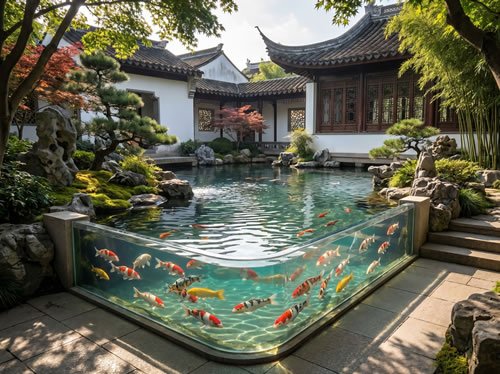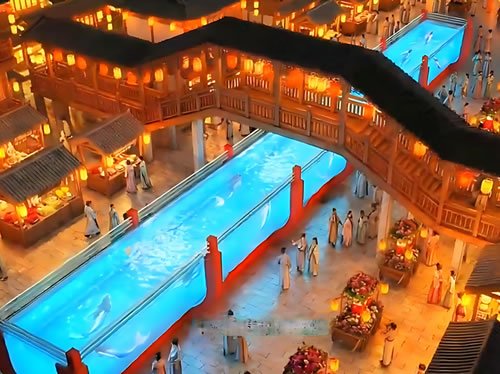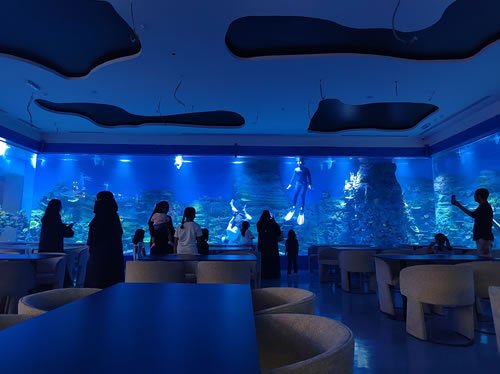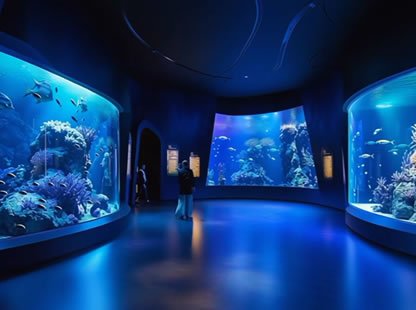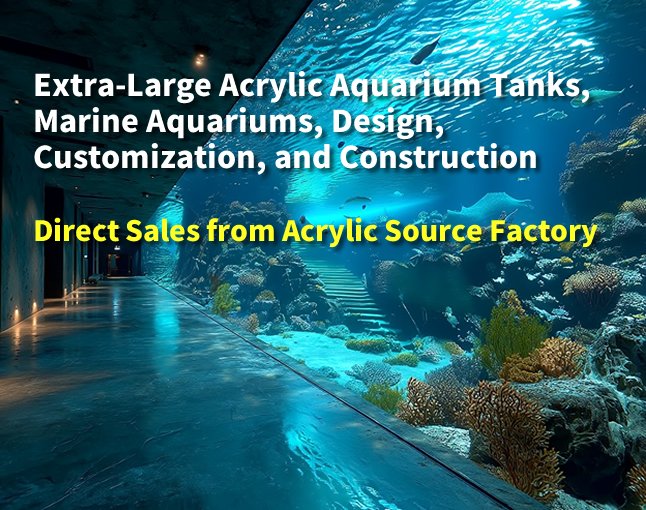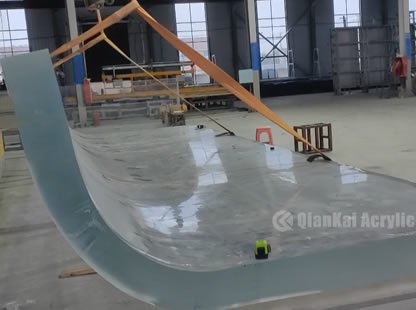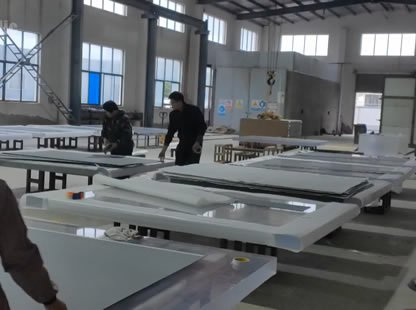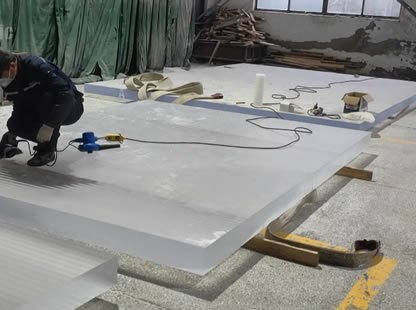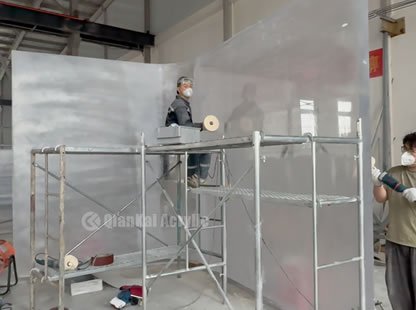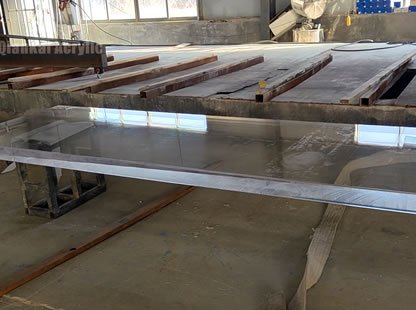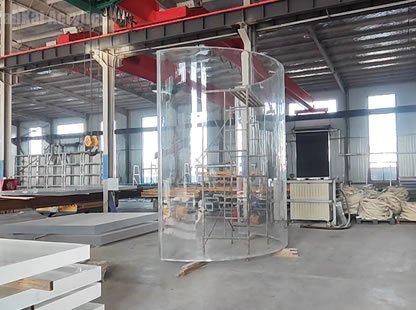

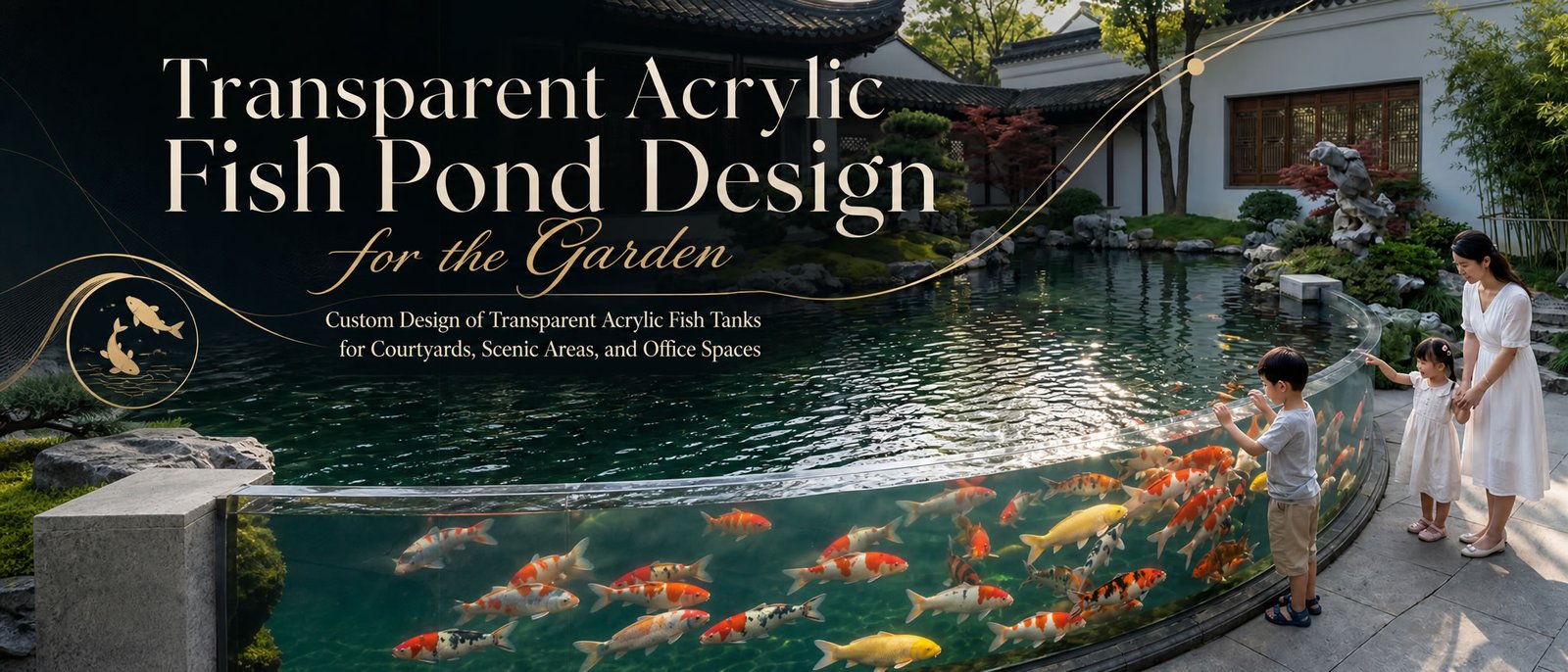
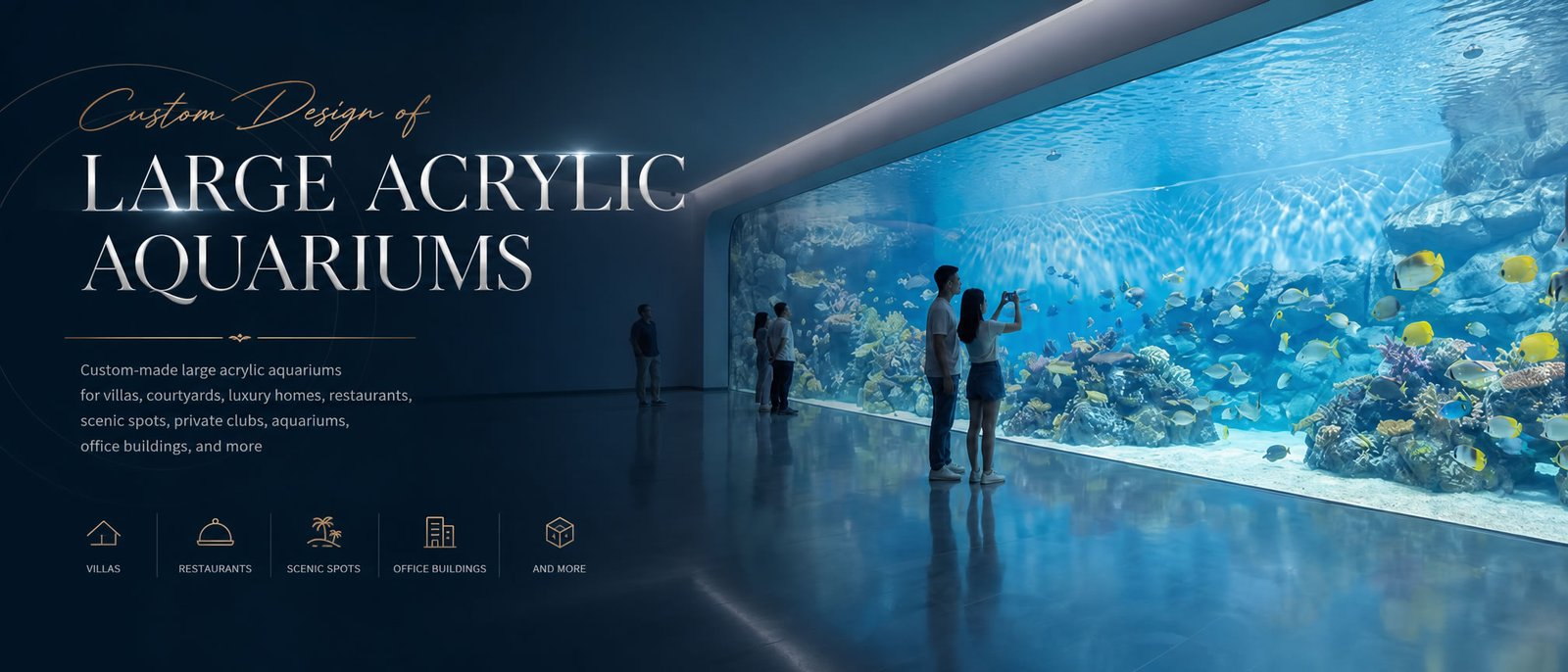
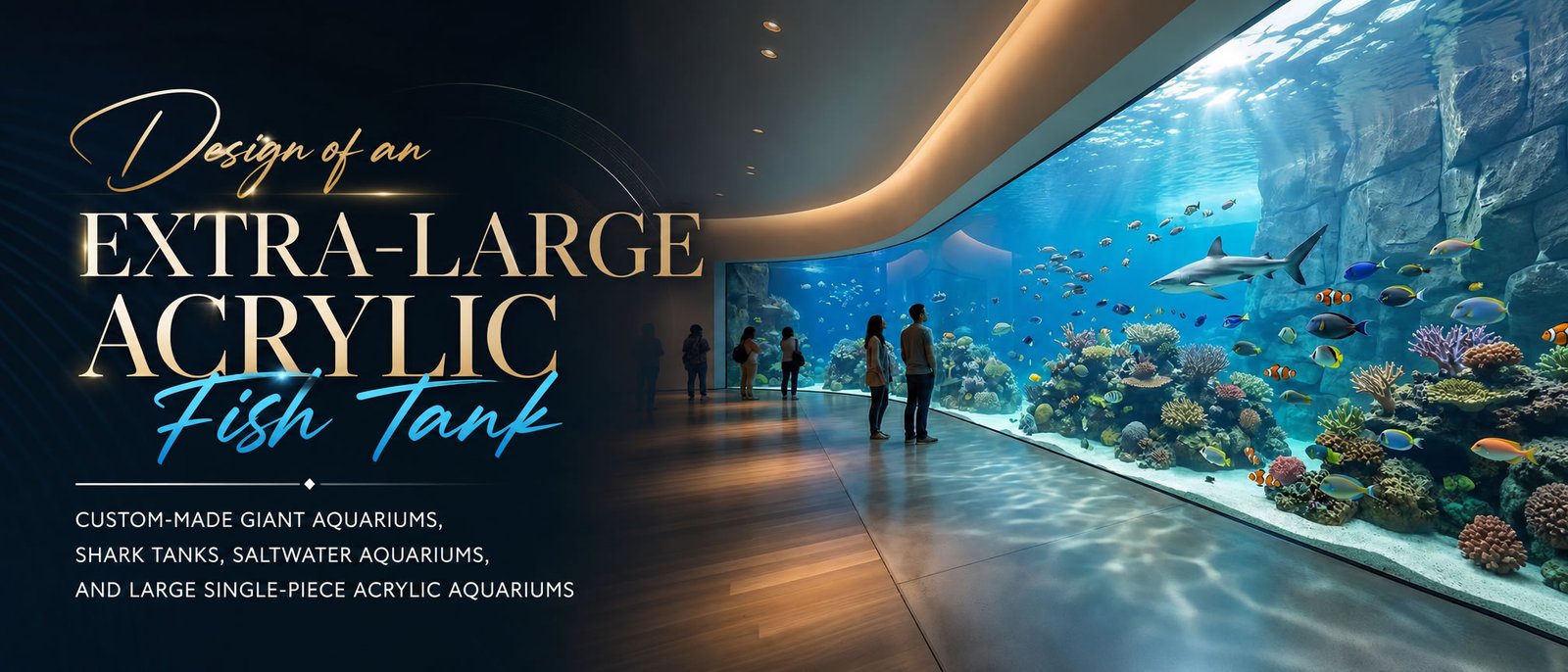
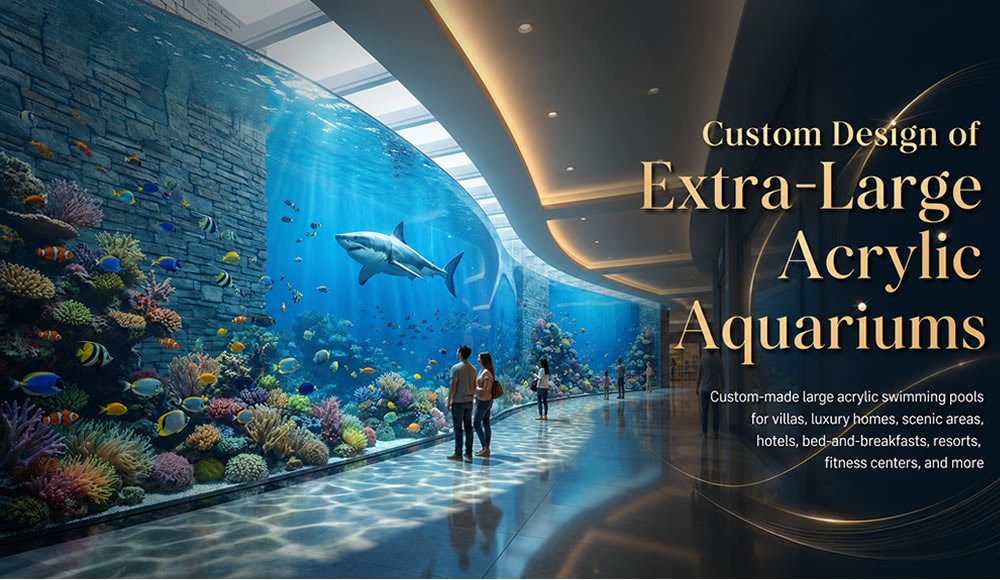
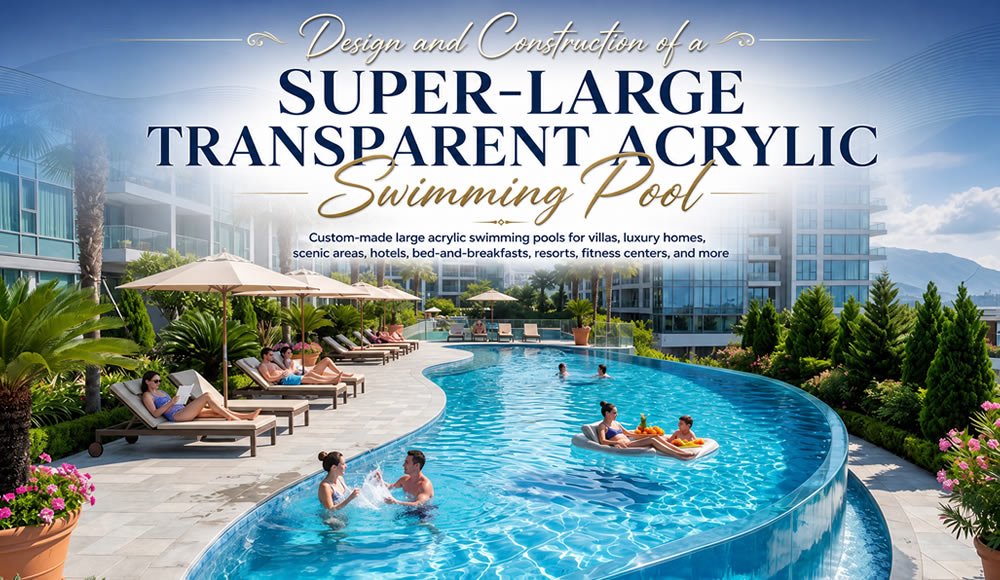
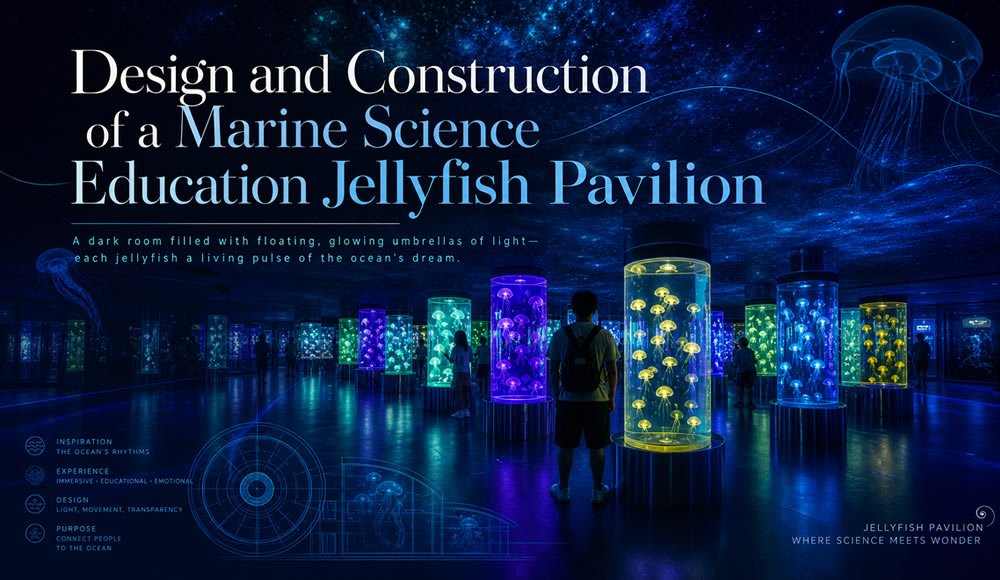
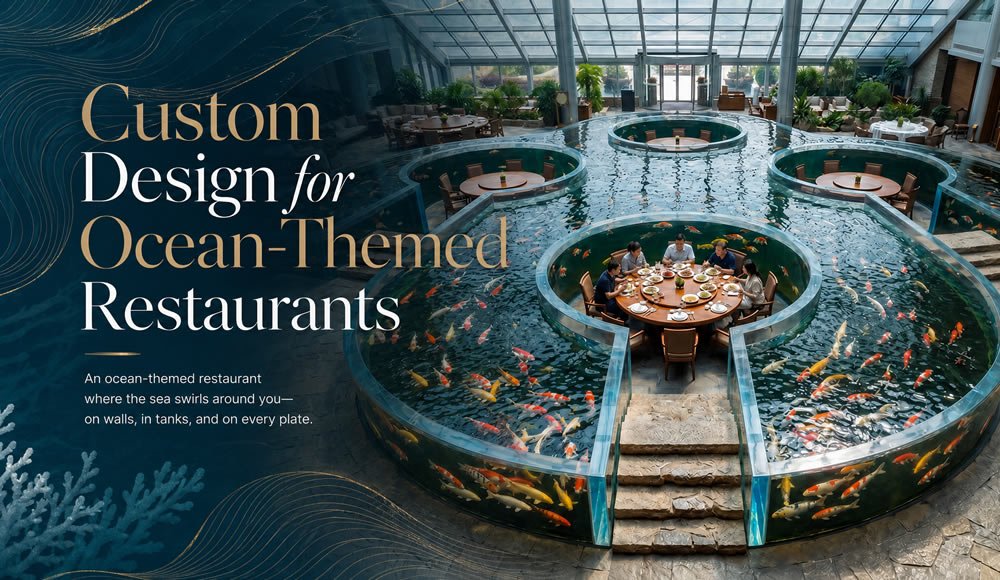
In the field of high-end, large-scale aquarium landscaping, rounded-corner acrylic aquariums—with their soft, flowing lines and 360° unobstructed views—are gradually replacing traditional right-angle aquariums, becoming the mainstream choice for luxury aquatic displays in hotel showrooms and private residences. Unlike ordinary thin-walled ornamental tanks, large-scale rounded-corner aquascape tanks are typically constructed from a single piece of 12-centimeter (120 mm) thick acrylic sheet. Many people mistakenly believe that rounded corners are merely a stylistic upgrade; in reality, the rounded-corner structure, the acrylic material, and the 12-centimeter thickness form a comprehensive hydrostatic pressure system that not only enhances the viewing experience but also completely resolves the structural safety challenges associated with large aquariums.

I. Hydrostatic Pressure Characteristics of Rounded-Corner Aquariums: The Core Difference from Right-Angle Tanks
The core principle of hydrostatic pressure is uniform force distribution. The greatest drawback of traditional right-angle aquariums lies in stress concentration at the corners. The 90° corners of square tanks act as structural dead zones; when water exerts pressure from all directions, the force cannot be evenly dispersed and instead accumulates heavily at the corners, leading to localized high-pressure loads over time. This is also the primary reason why large right-angle aquariums are most prone to delamination, deformation, and leaks.
In contrast, rounded-corner aquariums utilize a curved transition structure that completely eliminates these structural dead zones. When water pressure acts on the smooth, curved tank walls, it spreads evenly along the curvature—without localized buildup or structural weak points—resulting in a more balanced and stable load-bearing structure overall. However, curved tank walls subject the material to complex stress patterns, requiring far greater resistance to bending and creep than flat panels. This is the key reason why ordinary thin sheets cannot be used to construct large rounded-corner aquariums; structural support must be provided by 12-centimeter-thick acrylic sheets.

II. Rounded-Corner Aquariums Made of 12-Centimeter-Thick Acrylic
Acrylic itself offers excellent toughness and high malleability, making it the only material capable of producing seamless, one-piece rounded-corner aquariums. However, toughness does not equate to sufficient rigidity. When large-volume rounded-corner aquariums are filled with water, the curved surfaces are subjected to continuous, uniform circumferential water pressure, and the thickness of the acrylic sheet directly determines the structural stability.
First, 12-centimeter-thick sheets eliminate the risk of pressure-induced deformation on the curved surfaces. Rounded-corner aquariums made from thin acrylic are prone to slight bulging and surface distortion under continuous water pressure. This not only compromises the smooth, uniform appearance but also causes light refraction distortion, affecting the viewing experience. The 12-centimeter-thick cast acrylic is dense and highly rigid, significantly enhancing the panel’s bending and compressive strength. It reliably withstands the circumferential pressure of deep water, ensuring no bulging, deformation, or springback over long-term use, and perfectly maintaining the smooth curves of the rounded tank.
Second, the thick panel ensures uniform stress distribution throughout the structure, eliminating potential hazards. The rounded-corner aquarium features a seamless, monolithic structure with no adhesive joints; the entire structure relies solely on the panels themselves to bear the load. The optimal 12-centimeter thickness allows the entire tank wall to act as a unified load-bearing unit, distributing water pressure evenly across every part of the panel surface. This prevents localized overloading, eliminating the risk of cracking and leaks at the source, making it ideal for large-scale, high-water-level landscape aquariums.
Finally, it withstands dynamic water pressure impacts, enhancing durability. Daily water changes, water circulation, and the movement of fish create dynamic water flow impacts; the curved structure more effectively absorbs and disperses these forces. The 12-centimeter-thick acrylic offers exceptional impact and tear resistance, easily withstanding repeated dynamic water pressure impacts while resisting material creep and aging caused by long-term water pressure. This significantly extends the service life, ensuring stability and safety year-round.

III. Unique Aesthetic Advantages of the 12-Centimeter-Thick Acrylic Rounded-Corner Fish Tank
Leveraging the optical stability of the 120mm-thick sheet and the advantages of its rounded-corner design, this fish tank achieves a perfect balance between safety and aesthetics. High-purity, thickened acrylic boasts a light transmittance of up to 92%. The material is uniform and free of impurities throughout. Combined with a seamless, rounded curved surface, light refraction is soft and uniform, completely eliminating the issues of light distortion and visual distortion found at the corners of right-angled aquariums.
The 360° curved, unobstructed view, paired with the substantial and warm texture of the tank walls, creates a three-dimensional, full, and crystal-clear aquatic landscape. with fish swimming and aquatic plants visible without obstruction or distortion, creating a natural, immersive underwater atmosphere. Additionally, the thickened panels are scratch-resistant, wear-resistant, UV-resistant, and resistant to yellowing and clouding, remaining as clear as new even after long-term use—combining practical safety with a high-end aesthetic.
Conclusion
12-centimeter-thick acrylic panels are an essential requirement for large rounded-corner aquariums to withstand water pressure. The rounded-corner design addresses the safety concern of localized water pressure stress, while the 12-centimeter thickened construction compensates for the structural weakness of curved tank walls, enabling uniform pressure distribution, zero deformation, and high durability. Compared to standard aquariums, this solution is based on mechanical optimization and guaranteed by material thickness. It not only achieves a sleek, sophisticated curved aesthetic but also establishes a solid safety foundation for large-scale aquatic landscapes, making it the preferred choice for high-end acrylic aquatic landscape projects.









 Optimized by Seraphinite Accelerator