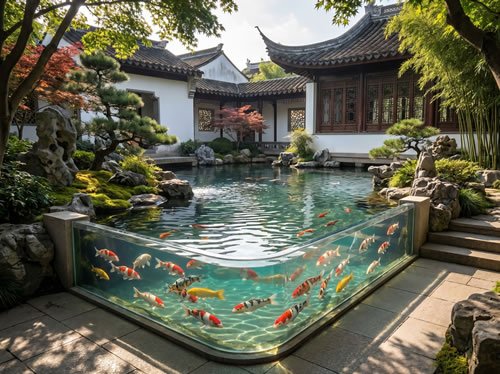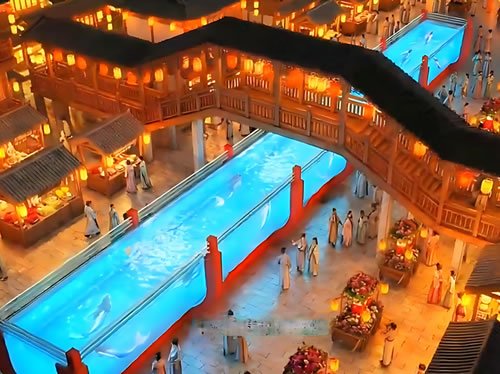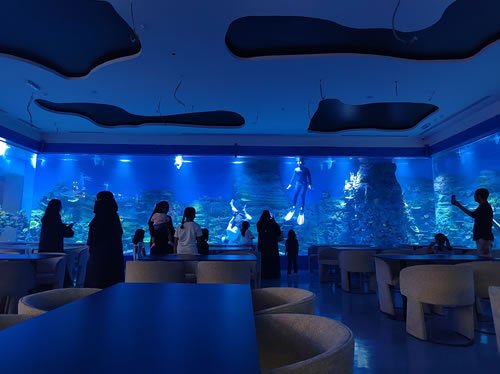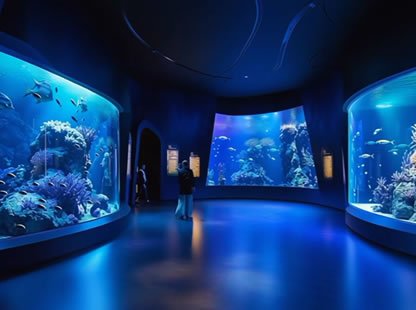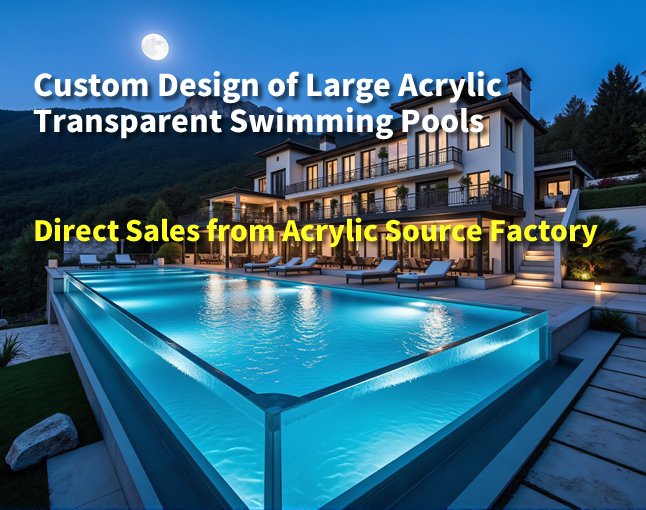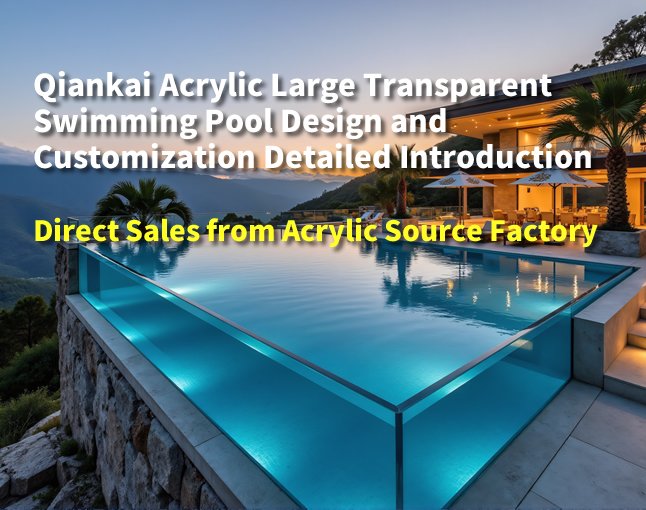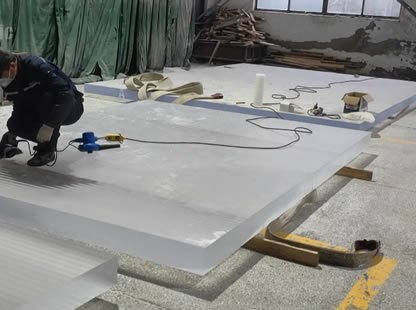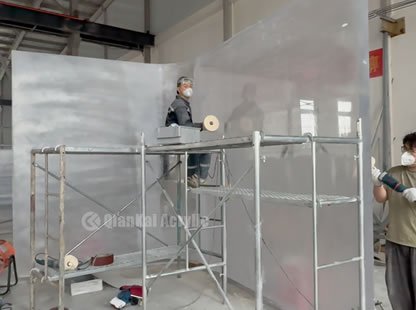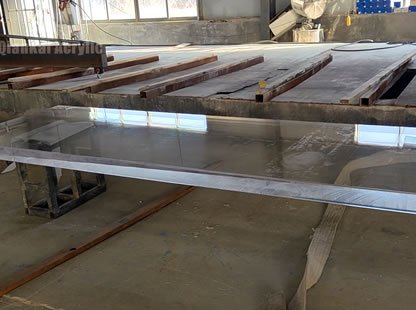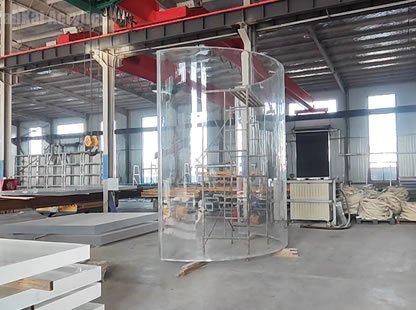


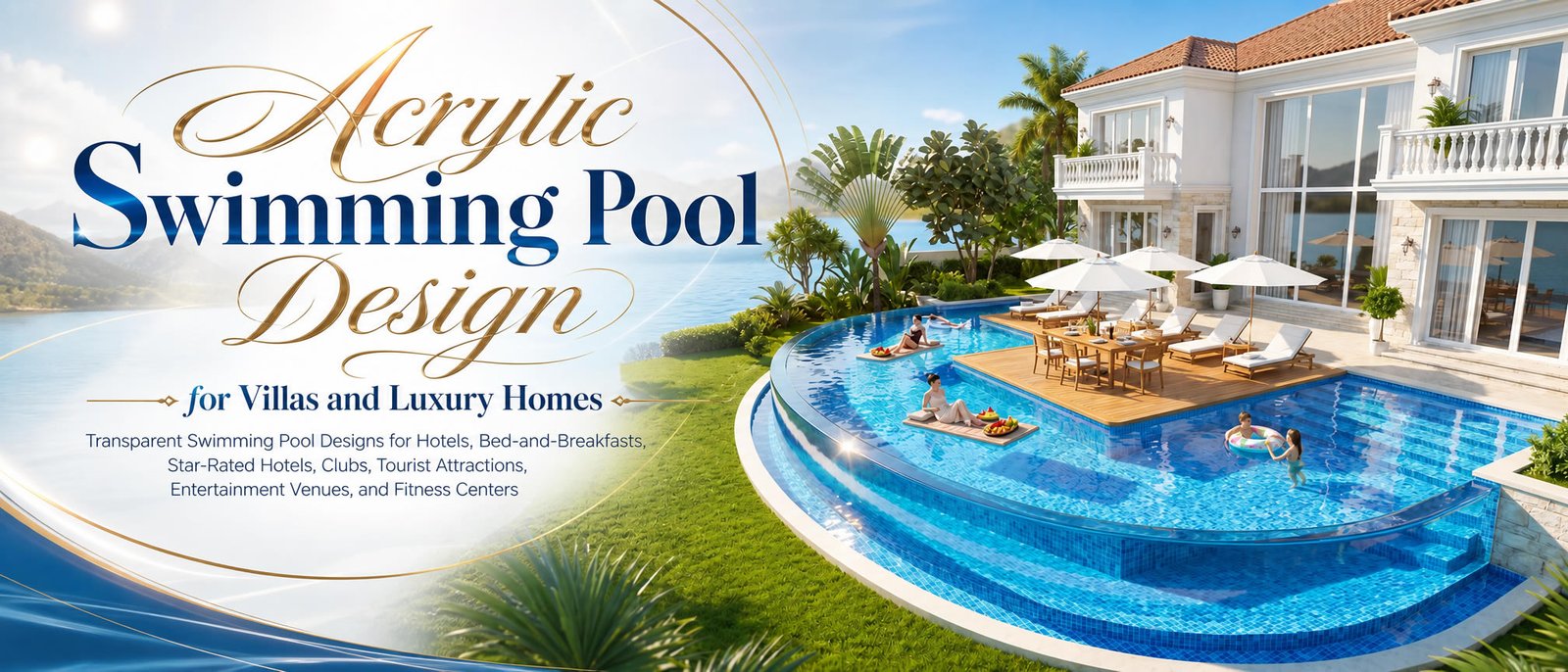
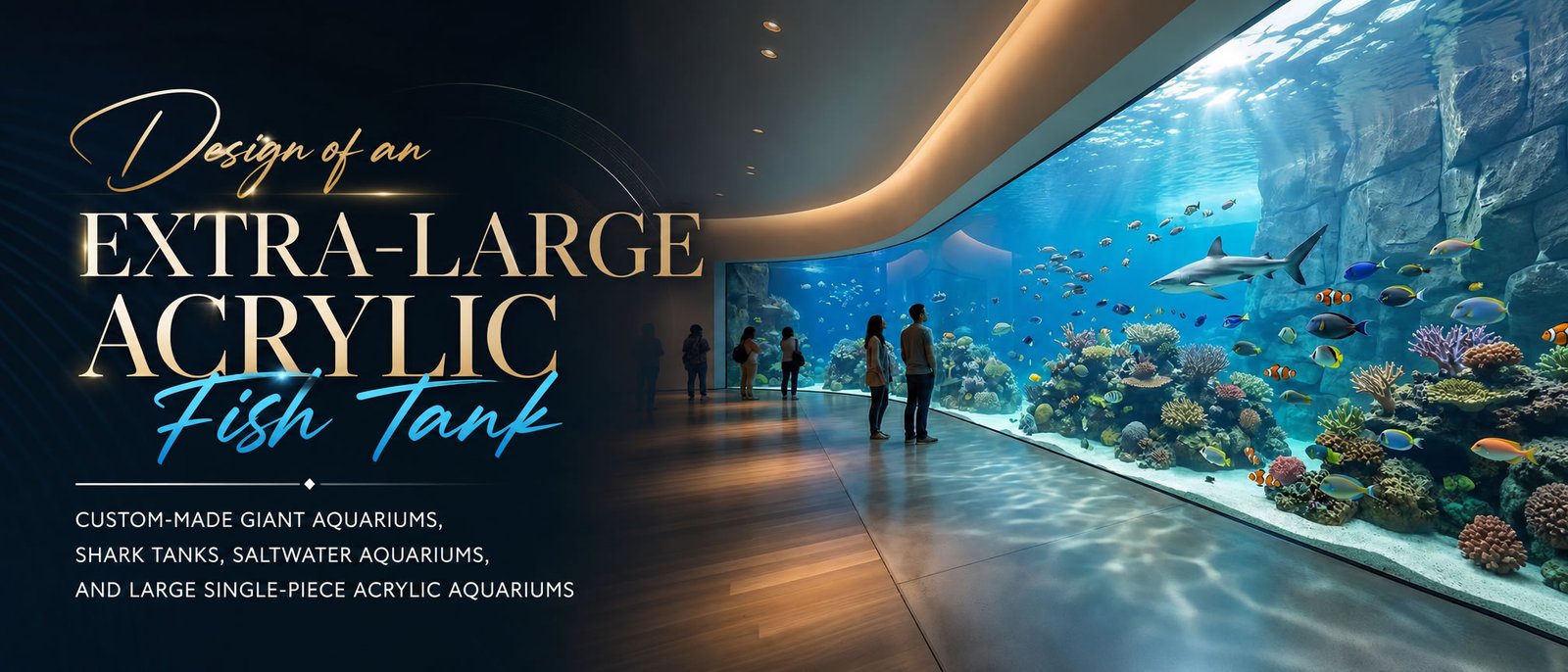

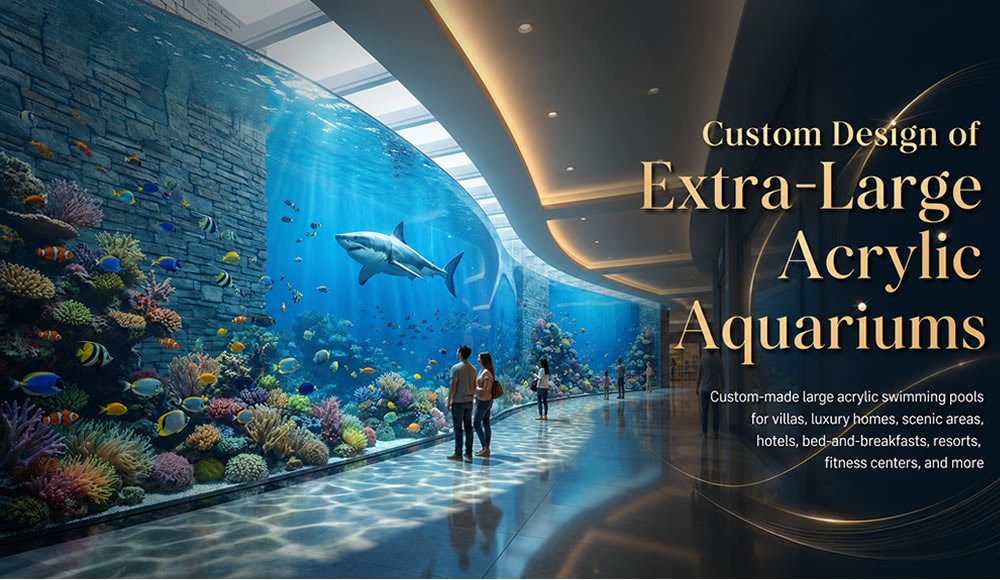
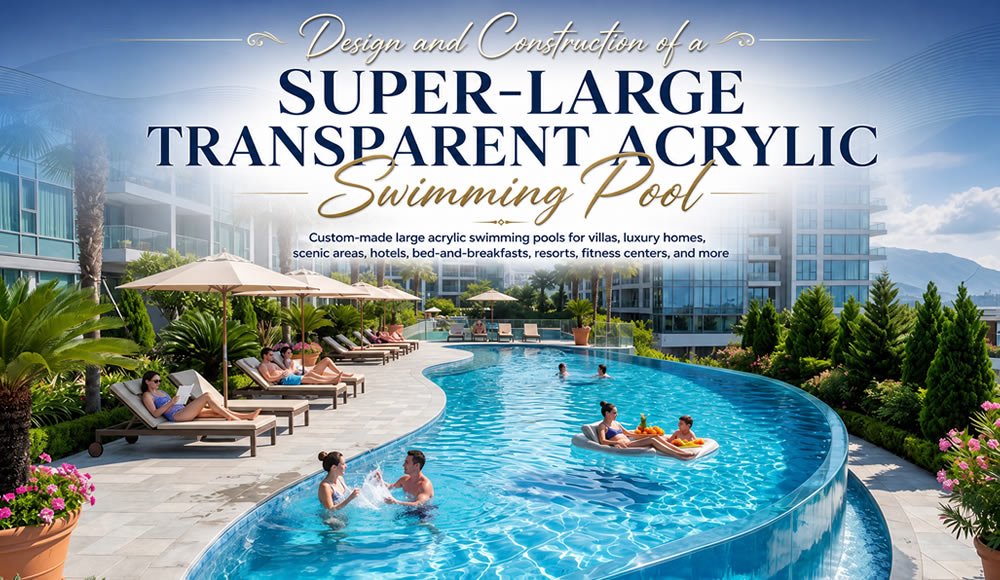
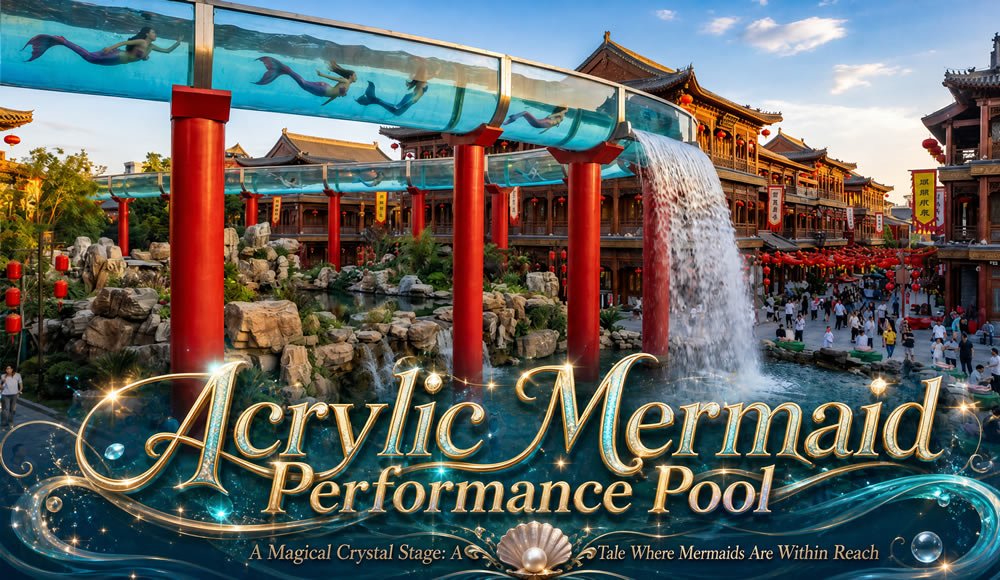
In modern landscape design, transparent acrylic swimming pools have completely shattered the closed-off, rigid image associated with traditional concrete pools. With their transparent, suspended water landscape effect, they have become iconic features in high-end bed-and-breakfasts, villa gardens, and commercial clubs. Unlike ordinary aquariums, swimming pools are specialized water environment projects characterized by great water depth, large water volume, and high dynamic loads. High-end infinity pools and cantilevered pools on the market all uniformly use 12 cm (120 mm) thick, pool-grade acrylic panels. This precise thickness is not merely an aesthetic premium but represents the optimal engineering standard that balances extreme visual transparency, deep-water pressure resistance, and long-term outdoor weather resistance—a core feature that neither glass nor ordinary panels can replace.
I. The Unparalleled Visual Experience of a 12-Centimeter-Thick Acrylic Transparent Pool
The 120mm ultra-thick cast acrylic panels redefine the visual relationship between people and the pool, completely breaking free from the constraints of traditional pool walls to create a sophisticated and soothing immersive floating water landscape—with a visual quality far surpassing that of ordinary thin transparent panels.
With zero distortion and high-definition clarity, they faithfully reproduce the pure texture of water. High-purity acrylic specifically designed for swimming pools achieves a light transmittance of over 92%, outperforming the light transmission of ordinary tempered glass. Unlike thin panels, which are prone to issues such as curved-surface refraction distortion, bluish or hazy water color, and image stretching or distortion, the 12-centimeter-thick, high-density monolithic panel features a uniform and dense internal structure, extremely high surface flatness, and stable, consistent optical performance. Whether observing still water in shallow areas or dynamic ripples in deep water, the water appears crystal-clear and vibrant through the acrylic walls—with true-to-life, saturated colors, free from ghosting, haze, or visual distortion. It perfectly recreates the water’s natural, pure, and translucent texture, making still water resemble glass and flowing water resemble drifting clouds, while creating a sophisticated, understated luxury ambiance.
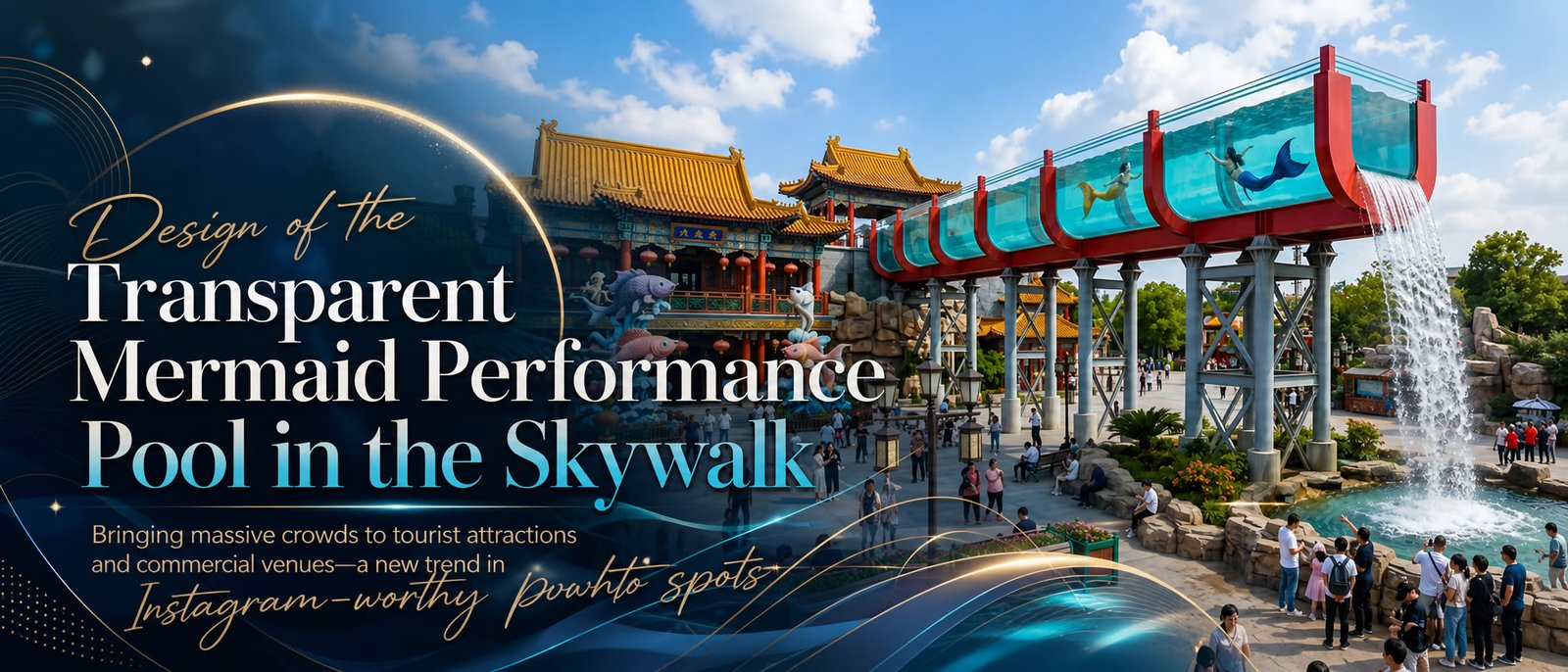
The edge-less, floating visual effect breaks down spatial boundaries. Leveraging the structural support provided by 12-centimeter-thick acrylic panels, transparent pools can achieve a minimalist design free of frames or steel frameworks, creating stunning, Instagram-worthy designs such as edge-less pools, side-view floating pools, and high-altitude cantilevered pools. The substantial yet transparent acrylic walls blend seamlessly into the background, making the pool water appear to be free from the constraints of the ground and walls, creating a dreamlike effect where the water seems to float mid-air, merging with the sky. In outdoor settings, the pool blends seamlessly with the blue sky, gardens, and river views; indoors, the crystal-clear water softens the spatial atmosphere, and the interplay of light, water, and shadow—combining stillness and movement—infuses static architecture with dynamic vitality, offering both artistic appeal and depth.
The thick panels’ soft, luminous texture creates a more sophisticated interplay of light and shadow. Ordinary thin-panel transparent pools have a flimsy texture and produce harsh light and shadow effects; over time, they tend to yellow, become dull, and develop mottled surfaces. The 12-centimeter-thick acrylic panels undergo multiple precision polishing and curing processes, resulting in a smooth, delicate surface with uniform luster. As light passes through the water and the thick panels, it creates a soft, diffused effect, making the ripples in the water appear three-dimensional and clear, with subtle, sophisticated light and shadow patterns. Additionally, the panels offer excellent UV resistance and anti-aging properties. Even after prolonged exposure to direct sunlight or immersion in water, they are resistant to yellowing, clouding, and fading, maintaining a fresh and transparent appearance year-round while preserving their high-end aesthetic appeal.

II. The Key Reason Why Acrylic Sheets Must Be Used for Transparent Swimming Pools
Many people wonder why tempered glass—which is less expensive—cannot be used for transparent swimming pools. The key reason is that swimming pools are specialized structures characterized by great water depth, high water pressure, dynamic loads, and year-round outdoor use. Glass has critical shortcomings in these conditions, whereas acrylic is currently the only material that can simultaneously meet the requirements for optical performance, structural safety, design flexibility, and long-term weather resistance.
1. Exceptional deep-water pressure resistance, suitable for high-pressure pool conditions. Compared to the shallow, low-pressure environment of an aquarium, swimming pools typically have depths ranging from 1.2 to 2 meters. Each square meter of wall surface must withstand several metric tons of static water pressure, compounded by dynamic loads such as swimmers moving, diving, and water wave impacts, placing extremely high demands on the panels’ resistance to pressure and deformation. Tempered glass is extremely brittle; under deep-water high-pressure conditions, it is prone to uneven stress distribution and spontaneous cracking. Furthermore, glass cannot be fabricated into large, single-piece transparent walls and must be assembled from multiple panels, resulting in leaks at the adhesive joints and poor structural stability. In contrast, 12-centimeter-thick acrylic panels offer excellent toughness and distribute stress evenly, efficiently dispersing water pressure across the entire depth of the pool. With exceptional creep resistance, they do not develop bulges, warping, or deformation under long-term pressure, and their structural stability far exceeds that of glass, making them perfectly suited for the long-term, high-pressure operating conditions of swimming pools.
2. Safety and shatter-resistant properties eliminate the risk of shattering. Swimming pools are public and private spaces with frequent human contact, making safety a core requirement. Ordinary glass can shatter instantly under water pressure, external impacts, or temperature fluctuations, producing large amounts of sharp shards that can easily cause personal injury and pose significant safety hazards. Acrylic, on the other hand, is a quintessentially tough and safe material with an impact resistance 10–20 times that of ordinary glass. Its 12-centimeter-thick panels offer maximum resistance to impact and tearing. Even if damaged by extreme external forces, it will only develop cracks or produce large fragments with blunt edges—it will not shatter or send shards flying. This fundamentally eliminates the risks of water leakage and personal injury, making it the premier safety-grade material for aquatic environments.
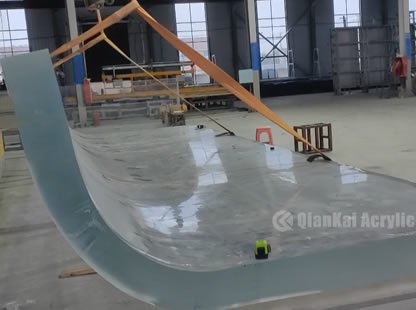
3. It can be molded in a single piece to achieve borderless, minimalist designs. Tempered glass can only be processed into flat, regular panels; it cannot be used to create curved, angled, or large-span integrated shapes, making it impossible to realize the borderless, cantilevered “Instagram-worthy” pool designs that are currently trending. Acrylic, on the other hand, is highly malleable. It can be softened at high temperatures for one-piece casting and seamless bending, making it easy to create curved pools, transparent corner walls, high-altitude cantilevered pools, double-layered hollow pools, and other custom shapes. The entire process involves no joints, no adhesive seams, and no obstructions, fully realizing a 360° panoramic transparency effect that meets the personalized and artistic design demands of modern landscapes—a technical barrier that glass materials cannot overcome.
4. Water-resistant, weather-resistant, and corrosion-resistant, suitable for all-weather use. Pool water contains chemicals such as chlorine and disinfectants over extended periods and is constantly exposed to outdoor conditions including sunlight, rain, and temperature fluctuations. Ordinary glass has poor corrosion resistance; prolonged contact with pool chemicals can cause it to corrode and become cloudy, and it cannot withstand UV-induced aging. 12-centimeter-thick pool-grade acrylic undergoes a special weather-resistant curing process, offering excellent resistance to acids, alkalis, corrosion, and UV radiation. It withstands the erosion of pool chemicals and intense outdoor exposure, is resistant to yellowing, whitening, and aging, and has a service life of up to several decades, significantly reducing long-term maintenance and renovation costs.
5. Lighter weight, stable installation, and easy maintenance. For the same dimensions and load-bearing standards, acrylic weighs only about half as much as glass. The weight of 12-centimeter-thick acrylic panels is even more manageable, significantly reducing the load on the pool’s structural framework and making it suitable for special installation scenarios such as high-altitude cantilevers, rooftop pools, and elevated pools. Additionally, the surface of acrylic sheets is dense and smooth, preventing limescale buildup and inhibiting algae growth; they can be cleaned simply by wiping with clean water. Minor scratches can be repaired through polishing, ensuring the sheets remain as clear and pristine as new over time, making maintenance far less demanding than that of glass pools.

III. 120mm Thickness: The Golden Standard for Safety in Transparent Pools
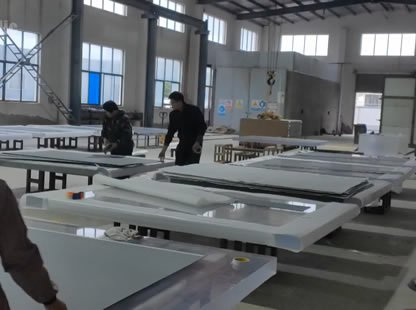
Compared to 10-centimeter-thick aquariums, swimming pools have greater water depths, bear heavier loads, and are subject to more complex usage scenarios. In the engineering field, 12 centimeters is widely recognized as the golden standard thickness for small- to medium-sized transparent infinity pools and side-view pools. This thickness strikes the perfect balance between structural safety and visual aesthetics: if the material is too thin, it cannot withstand the high pressure of deep water and dynamic impacts, making it prone to deformation and leaks; if it is too thick, it increases the dead weight, affects the translucency and texture, and raises construction difficulty and costs. The 120mm thickened acrylic not only stably withstands water pressure across the entire pool area and eliminates safety hazards but also maximizes the transparent, floating water feature effect, representing the optimal combination of practicality and aesthetics.
Conclusion
The 12-centimeter (120mm) thick transparent acrylic pool represents a perfect fusion of modern materials technology and landscape aesthetics. Acrylic’s unique toughness, malleability, and weather resistance transform what would otherwise be a closed, heavy pool into a visually stunning, transparent, and suspended structure. Meanwhile, the precise 120mm thickened design leverages robust engineering expertise to establish a solid safety barrier for deep water, completely resolving the numerous pain points associated with traditional glass and concrete pools. It is not merely a space for swimming but a flowing work of aquatic art, where the vitality of water, the transparency of space, and the texture of architecture coexist in perfect harmony, redefining the sophisticated form of the modern swimming pool.










 Optimized by Seraphinite Accelerator