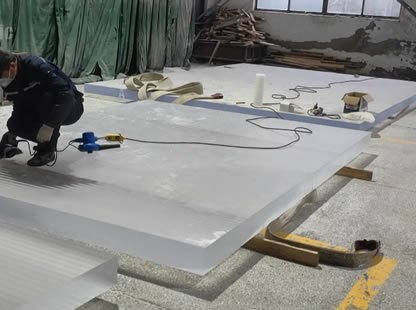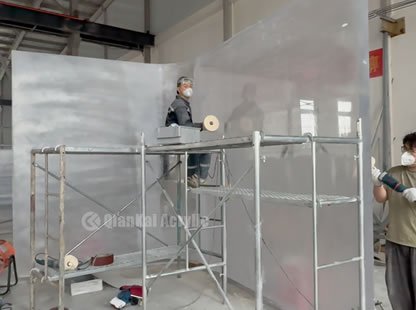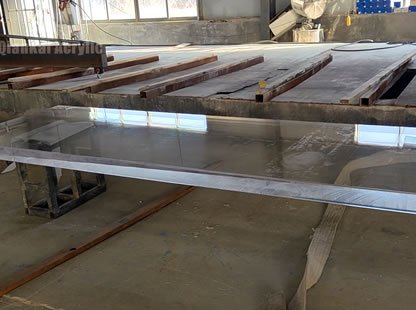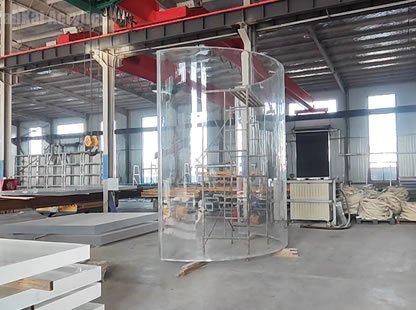




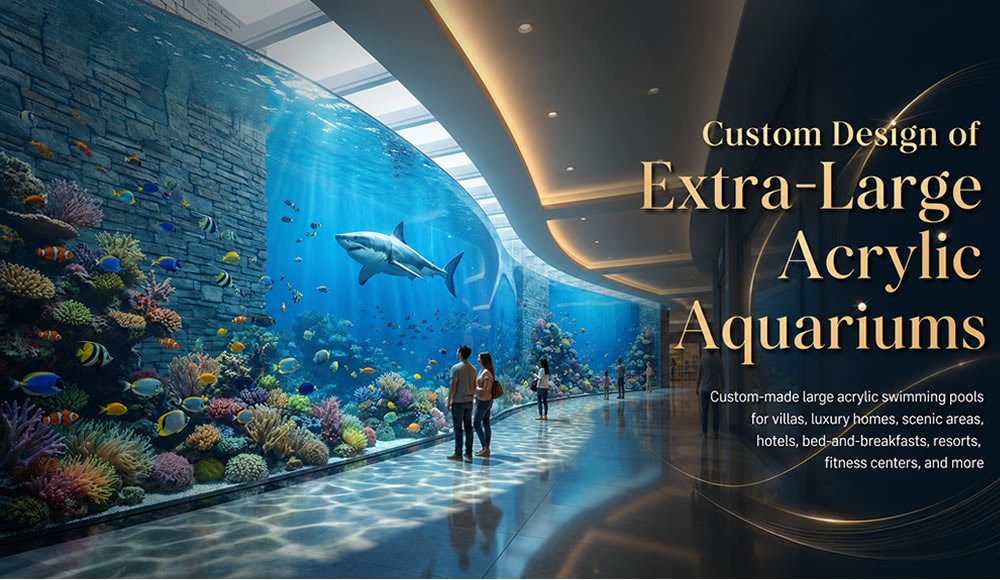
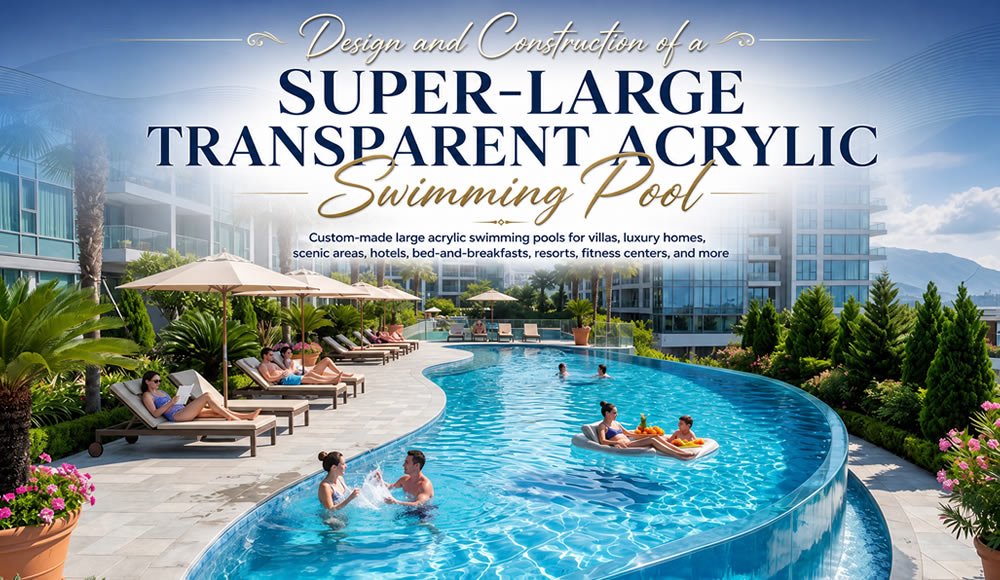
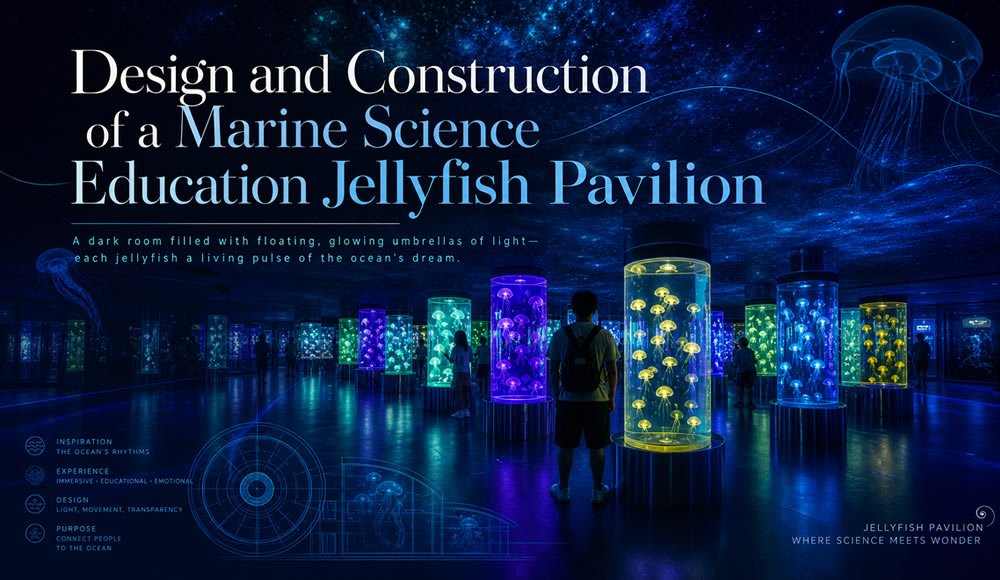
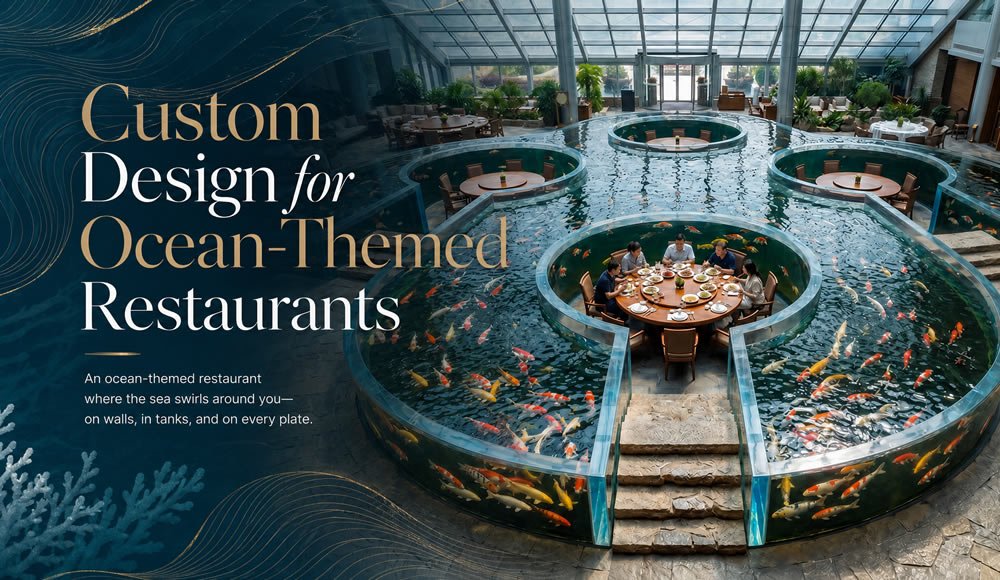

In the field of aquarium landscaping, cylindrical aquariums have always stood out for their unique three-dimensional appearance. Unlike the rigid, boxy shapes of conventional square aquariums, their smooth, cylindrical structure fully encapsulates the vitality of the aquatic landscape. High-quality, large cylindrical aquariums are almost exclusively crafted from a single piece of 10-centimeter-thick acrylic sheet. This substantial thickness far exceeds the standard for ordinary thin-walled glass or acrylic aquariums. It is not only key to achieving the ultimate visual impact but also a core design element that ensures the cylindrical structure remains safe and stable over the long term, allowing the aquarium to balance aesthetic appeal and practical stability.
I. The Unique Visual Experience of a 10-Centimeter-Thick Acrylic Cylindrical Aquarium
Thickness is never merely a matter of technical specifications; 10-centimeter-thick acrylic panels endow the cylindrical aquarium with a unique visual quality, completely breaking through the visual limitations of ordinary aquariums and creating an immersive, three-dimensional aquatic landscape.
First and foremost is the crystal-clear, distortion-free viewing experience. Ordinary thin circular glass aquariums, due to the curvature of the surface, uneven material thickness, and insufficient glass hardness, are highly prone to issues such as chaotic light refraction and image distortion. When observing schools of fish, this can result in ghosting, stretching, and blurring, severely compromising the aesthetic appeal of the aquatic landscape. In contrast, the 10-centimeter-thick, high-precision cast acrylic sheet features uniform material density and exceptional surface flatness, with a light transmittance of over 92%—rivaling that of high-transparency optical glass. The substantial thickness of the panels effectively regulates the angle of light refraction on curved surfaces and perfectly adapts to the cylindrical curvature. Whether viewed from eye level, looking up, or looking down, the forms of the water, aquatic plants, fish, and shrimp appear true-to-life and clear—free from distortion, haze, or ghosting—delivering an immersive, crystal-clear aquatic scene viewable without special glasses.
Next is the three-dimensional, enveloping dome-like viewing experience. The cylindrical structure itself offers the advantage of 360° viewing with no blind spots, and when paired with the substantial feel of 10-centimeter-thick acrylic, it minimizes the sense of the tank’s boundaries. Round aquariums made of thin panels can give off a flimsy, “light and fragile” impression, whereas tank walls crafted from extra-thick panels are warm, translucent, and substantial in texture. The smooth, curved surfaces naturally channel water flow and light, transforming the entire aquarium into a self-contained, serene miniature underwater world. When sunlight or artificial light passes through the thick acrylic walls and the water, the light diffuses in layers, creating soft and delicate transitions of light and shadow. As ripples flow and fish dart through the tank, the play of light and shadow gently follows the curves, creating an atmosphere that is both refined and sophisticated.
Finally, there is the enduring, like-new finish. Ordinary, thin acrylic aquariums are highly prone to yellowing, scratches, and clouding over time, causing the underwater scenery to gradually become murky and dull. The 10-centimeter-thick acrylic sheets undergo special curing and polishing processes, resulting in a dense, resistant surface with exceptional UV and oxidation resistance. They can withstand long-term exposure to moisture, dust, and light, maintaining a crystal-clear appearance year-round. The rich, matte finish inherent to the thick tank walls makes it a perfect fit for various settings, including homes, exhibition halls, and hotels. It serves not only as an aquarium but also as a highly decorative art piece.
II. Key Reasons for Prioritizing Acrylic Sheets for Cylindrical Aquariums
The primary materials for aquariums on the market are glass and acrylic. While square aquariums can be made from glass, it is nearly impossible to craft a cylindrical aquarium perfectly using glass. Acrylic is the optimal—and in many cases, the only—suitable material for cylindrical, curved-surface aquariums, with its key advantages centered on three dimensions: forming processes, structural safety, and user experience.
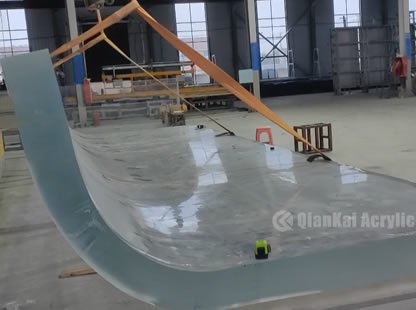
First, it can be formed into a single, curved piece, making it suitable for cylindrical structures. Standard tempered glass is hard and brittle, making it suitable only for producing regular, flat panels; it cannot be bent or shaped into large-radius, seamless curved surfaces. To create a cylindrical glass aquarium, multiple glass panels must be joined together with adhesive, resulting in visible glue seams at the joints. Not only do these seams disrupt the 360° unobstructed viewing experience, but they also tend to accumulate grime, develop mold, and cause leaks, significantly shortening the aquarium’s lifespan. In contrast, acrylic offers exceptional toughness and high malleability. After being softened at high temperatures, it can be bent into a single, seamless piece, creating a smooth, seamless cylindrical tank body. The entire process involves no splicing, no adhesive marks, and no blind spots, perfectly preserving the minimalist, fluid aesthetic of a circular aquarium—a core advantage that glass simply cannot achieve.
Second, its toughness provides superior shock and impact resistance, with a safety factor far exceeding that of glass. Cylindrical aquariums feature a three-dimensional hollow structure; once filled with water, the tank walls are continuously subjected to uniform circumferential water pressure, and the curved structure places extremely high demands on the material’s toughness and tensile strength. Glass is highly brittle; when a curved surface bears pressure, the stress distribution is uneven, and even a slight impact or temperature fluctuation can cause spontaneous breakage or cracking. Once damaged, it leaks instantly, posing a significant safety hazard. In contrast, acrylic is exceptionally tough. A 10-centimeter-thick sheet possesses outstanding tensile strength and impact resistance, enabling it to evenly distribute the circumferential water pressure across the cylindrical tank. It maintains stable pressure resistance and is resistant to deformation. Even when subjected to external impacts, it will not shatter or burst but will only experience minor dents, completely eliminating the risk of tank rupture and leakage. It is sufficiently safe for both residential and commercial use.
Third, the material is lightweight and easy to maintain, making it ideal for long-term care. For the same size and thickness, acrylic weighs only about half as much as glass. A 10-centimeter-thick acrylic cylindrical fish tank is lighter than a glass tank of the same specifications, making it easier to move, install, and position without placing excessive strain on the surface it rests on. Additionally, acrylic’s smooth, dense surface resists water scale buildup and inhibits bacterial growth, maintaining its clarity with simple daily wiping. Even if minor scratches appear over time, they can be polished away to restore the tank’s like-new finish. While glass aquariums are highly durable, scratches on them are irreversible, and curved glass surfaces create many hard-to-clean areas, making maintenance significantly more difficult than with acrylic tanks.
Fourth, they offer greater structural stability and are better suited for large-scale circular aquascapes. Medium- to large-sized cylindrical aquariums hold a large volume of water and experience higher water pressure, placing stringent demands on the structural stability of the tank. The adhesive joints in modular glass cylindrical tanks are structural weak points; prolonged pressure can cause the adhesive to fail and lead to leaks, making it impossible to produce larger sizes. In contrast, one-piece acrylic cylindrical tanks, combined with a 10-centimeter thickening process, form a seamless, monolithic structure. They distribute stress evenly with no weak points, enabling them to stably support the pressure of large water volumes. This allows for the creation of taller, wider large-scale aquascape tanks to meet the diverse needs of home aquascaping, commercial showrooms, and landscape decoration.
Conclusion
10-centimeter-thick acrylic sheets provide both aesthetic appeal and structural strength for cylindrical aquariums. Acrylic’s unique malleability makes smooth, seamless curved water features a reality, completely resolving the challenge of creating one-piece cylindrical aquariums—a limitation inherent to glass. Meanwhile, the 10-centimeter thickening design addresses the shortcomings of thin-walled materials, such as susceptibility to deformation, aging, and a flimsy appearance. With its flexible yet sturdy material properties, distortion-free transparency, and long-lasting durability, this acrylic frees cylindrical aquariums from the limitations of ordinary aquarium containers. It transforms them into exquisite aquatic displays that combine aesthetic appeal, safety, and practical value, allowing every circular water feature to showcase the pure, vibrant, and soothing romance of the underwater world.










 Optimized by Seraphinite Accelerator