
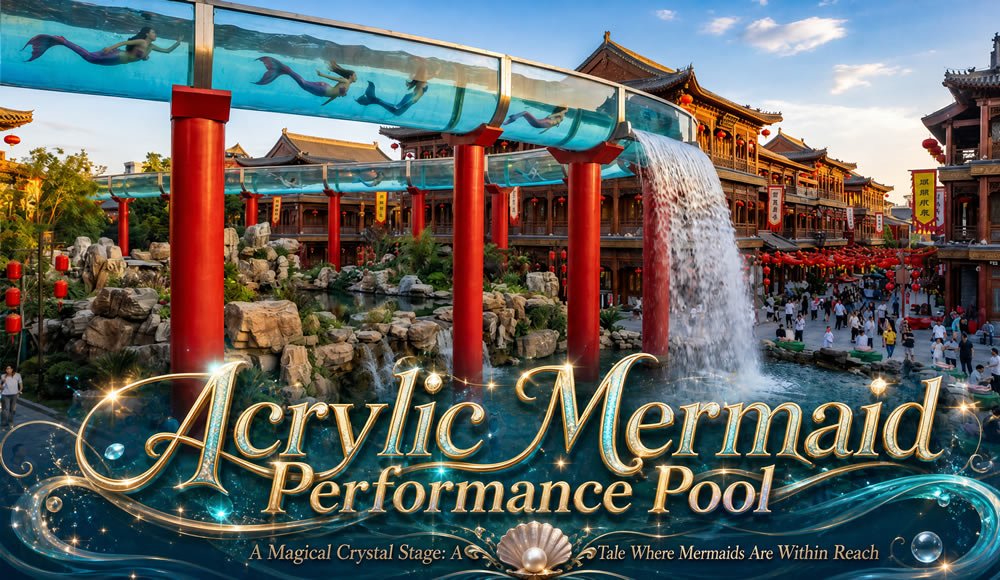
Beneath the Dome, Above the Deep Sea: A Submarine Wonder Crafted from 300-Millimeter Acrylic
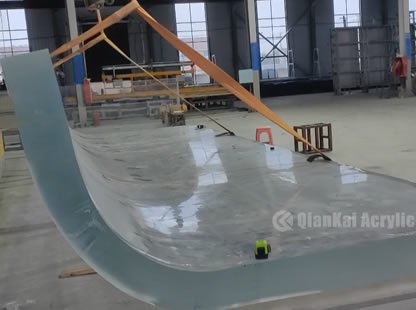
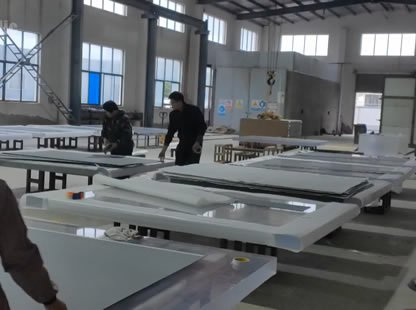
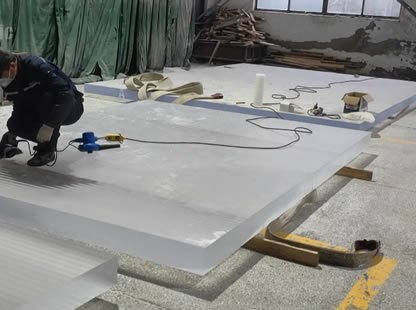
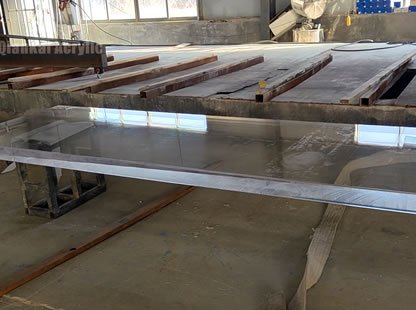
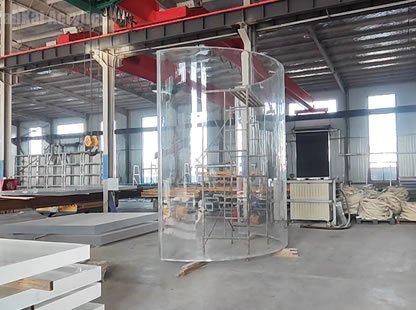
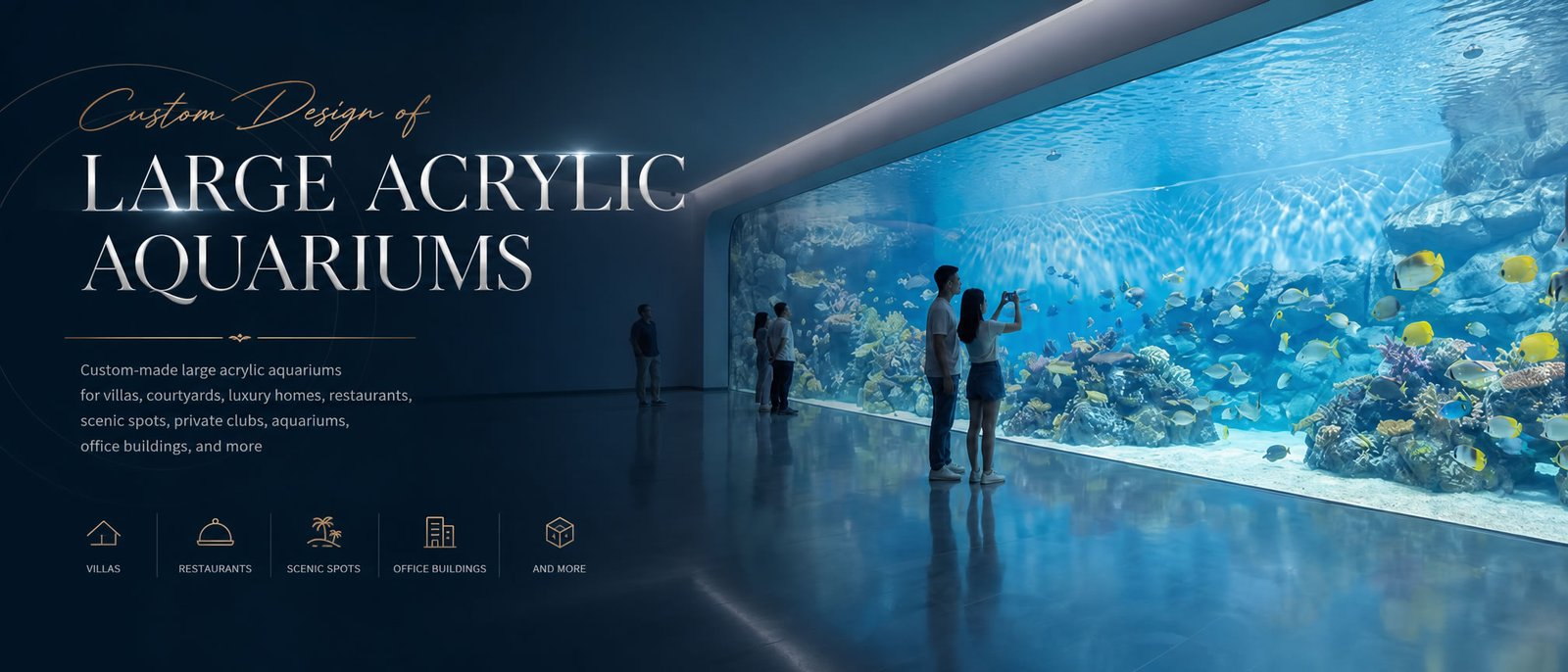
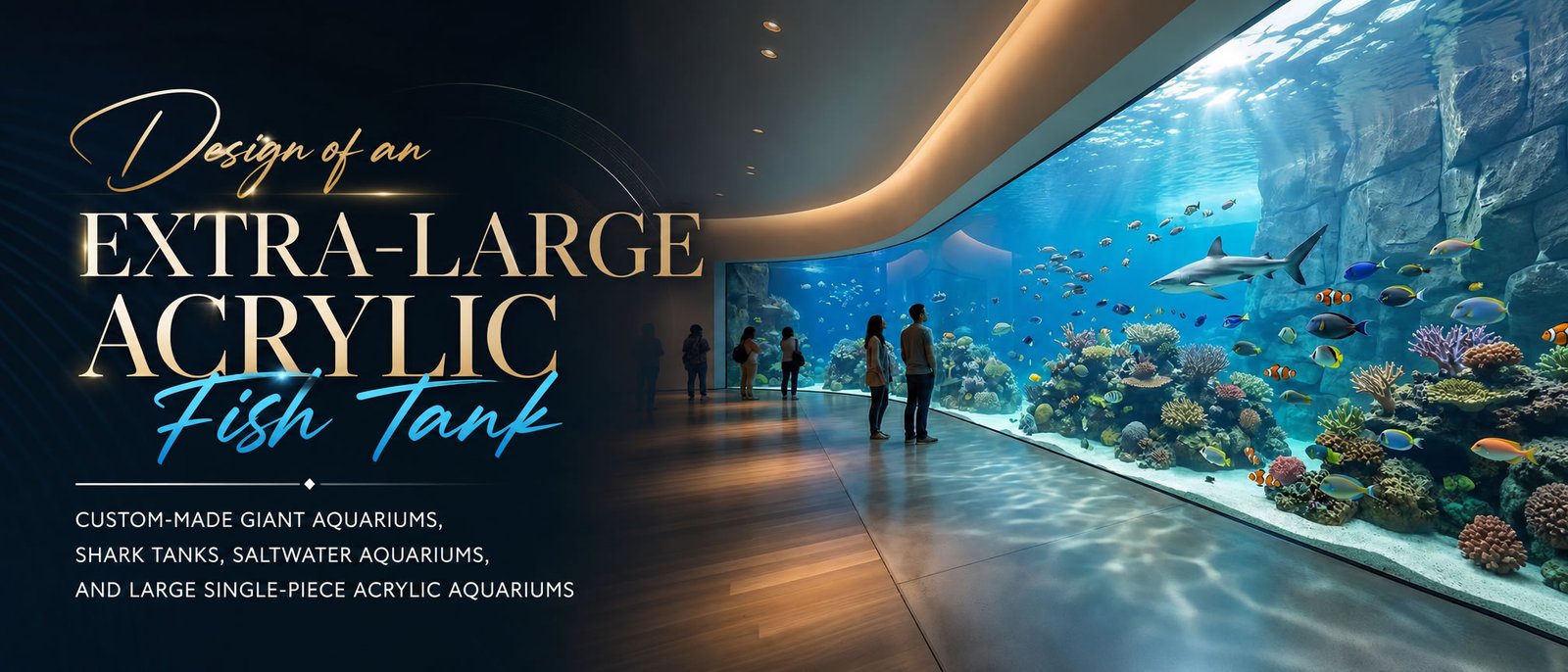
Today, we’re showcasing the 300-millimeter-thick curved dome acrylic panels currently being produced at Qiankai Acrylic Factory. These panels will be used in the underwater walkway of the “Underwater World,” where visitors can watch fish swimming overhead and take in the full splendor of the underwater world.
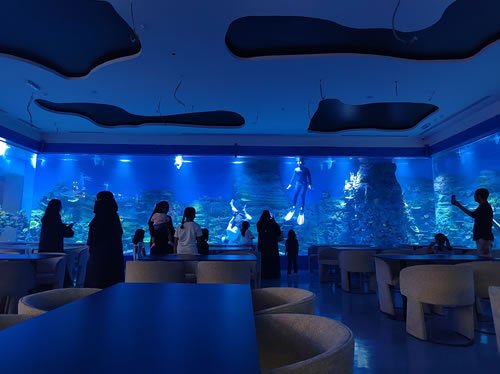
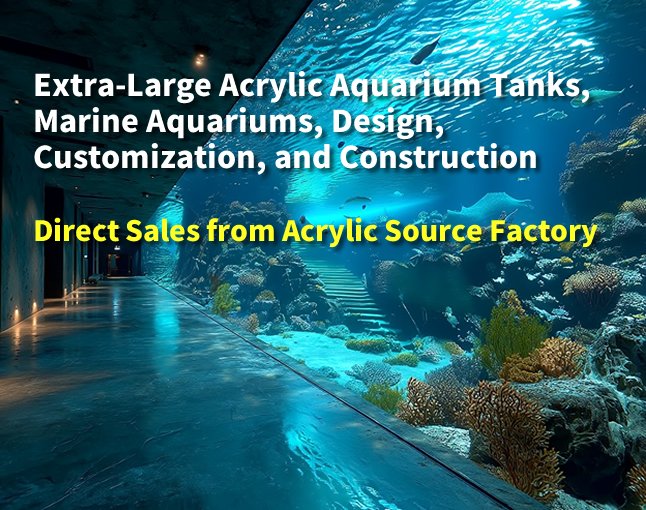
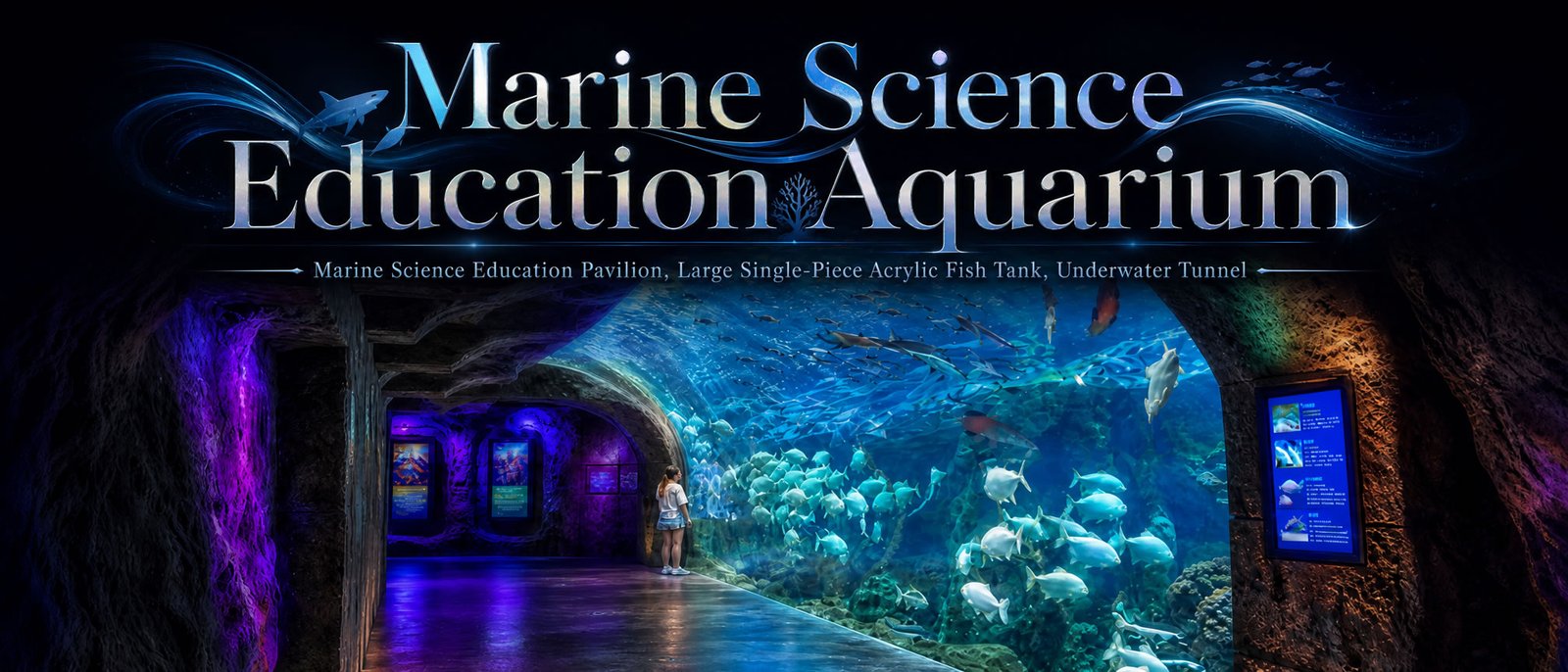
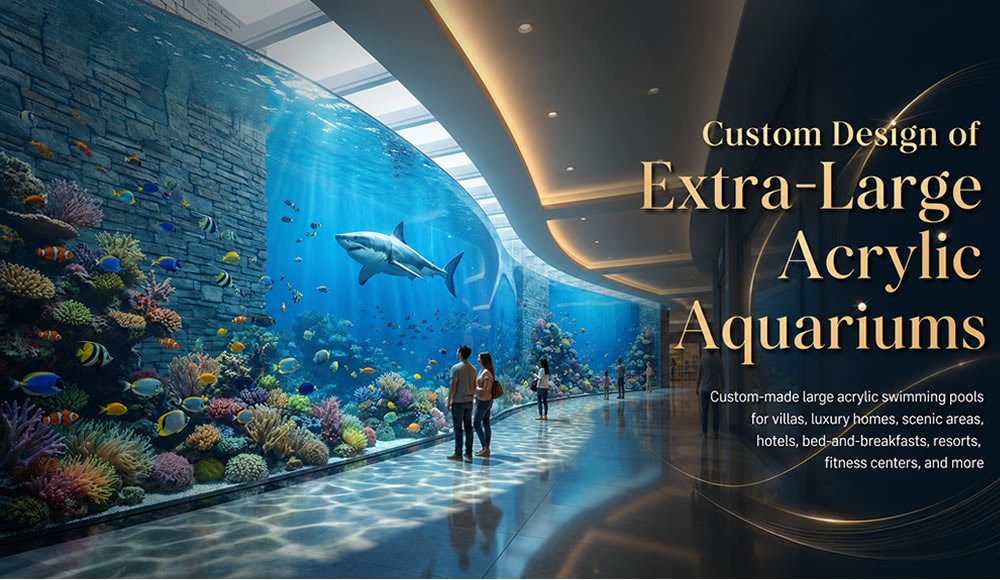
When visitors step into a large, dome-shaped acrylic underwater world, the first thing that greets them is not the salty, fishy smell of seawater, but the deep blue, crystal-clear light that fills the entire space. Above, tens of thousands of metric tons of seawater are steadily supported by a crystal-clear “sky”; schools of fish glide past like flowing ribbons of color; the massive silhouettes of sharks cast fleeting shadows; and sea turtles leisurely paddle their limbs, as if strolling among the clouds. This is a silent dialogue between humans and the ocean—and the entire secret behind this dialogue lies within the 300-millimeter-thick acrylic sheet beneath our feet.

I. Why Acrylic? — The Logic Behind Material Selection
In the world of materials used in aquarium engineering, acrylic (polymethyl methacrylate, PMMA) is the undisputed star. Compared to traditional inorganic silicate glass, acrylic offers unparalleled comprehensive advantages: with a density of just 1.19–1.20 g/cm³, it weighs less than half as much as glass yet possesses far greater toughness and impact resistance. More importantly, acrylic’s long-term creep behavior under water pressure can be precisely predicted through engineering modeling, enabling engineers to design perfect solutions for massive viewing windows at depths of tens of meters that balance safety and transparency. It is highly malleable and can be formed into complex, non-standard structures—such as arches, rings, and even hyperbolic surfaces—through thermal bending processes, which is precisely the core prerequisite for constructing dome-shaped underwater worlds.
II. The Confidence Behind 300 Millimeters—A Detailed Explanation of Technical Parameters
300 millimeters—a full foot in thickness—is by no means an arbitrary choice. Behind this figure lies rigorous hydrostatic calculations combined with safety factors multiplied several times over. According to the formula for hydrostatic pressure, water pressure increases by approximately 0.01 MPa for every additional meter of water depth. For an underwater tunnel designed for a depth of 8 meters, the water pressure on the bottom approaches 0.08 MPa; meanwhile, the dome structure must not only withstand the vertical load from the water above but also cope with the enormous bending moment caused by lateral water pressure. A 300-millimeter-thick acrylic sheet is the optimal solution for these extreme operating conditions.

Specifically, the key technical specifications for 300-millimeter-thick cast acrylic panels include:
Light transmittance: ≥93%, haze ≤1.0%, yellowing index ≤1.0. This means that light passes through the 300-millimeter-thick panels with virtually no obstruction, allowing every hue of the underwater world to be faithfully displayed before visitors’ eyes.
Tensile strength: ≥79.9 MPa.
Flexural strength: ≥97 MPa.
Compressive strength: approximately 1,100 kg/cm².
Impact strength: ≥13.3 J/m, more than 10 times that of ordinary glass.
Modulus of elasticity: ≥3.30 GPa.
Elongation at break: ≥5%.
It is worth noting that a thickness of 300 millimeters can be achieved through a single-pour casting process, eliminating the need for lamination. This fundamentally ensures the mechanical uniformity and optical consistency within the sheet. A single 300-millimeter-thick curved acrylic sheet can weigh over 2.5 metric tons, making its transportation, hoisting, and assembly a highly challenging precision engineering task in and of itself.
III. From Sheets to Dome—The Precision Dance of Installation Techniques
Assembling thick acrylic panels—each weighing several metric tons—into a massive underwater dome with a diameter of up to 12 meters is far from a simple “building-block” task. The entire installation process embodies the combined wisdom of materials science, structural mechanics, and precision manufacturing.
First comes segmented casting and thermal bending. The dome’s curved panels cannot be achieved by simply joining flat sheets—each curved panel must undergo a precise thermal bending process to ensure perfectly consistent curvature; otherwise, optical distortion would occur, compromising the viewing experience. The casting process itself requires precise control of temperature and polymerization rates to prevent the formation of bubbles and stress lines.
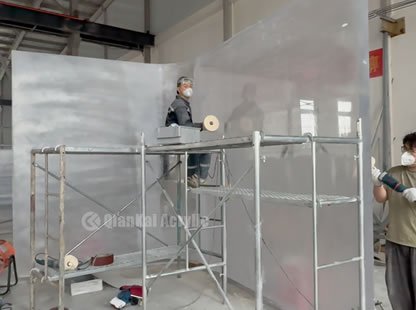
Next comes the in-situ polymerization and seamless bonding. The massive tunnel and dome cannot be constructed from a single piece of acrylic; instead, they are assembled from multiple thick panels. Workers use a specially formulated transparent gel—essentially an acrylic in-situ polymerization material made from the same material—to bond the panels seamlessly. After meticulous polishing, the joints are virtually invisible. The key to this process lies in the fact that the strength of the chemically bonded seams can reach over 80% of that of the original panels, eliminating the risk of leaks at the source. The seam width must be strictly controlled within 3–5 millimeters; any deviation could affect the load-bearing balance of the entire structure.
Next is the collaborative load-bearing of the steel framework. Although acrylic panels possess excellent compressive strength on their own, they still require a combined load-bearing system with the 316L stainless steel framework when faced with immense water pressure. Steel trusses are arranged at specific intervals to evenly distribute water pressure to the reinforced concrete main structure. The dome’s support system must fit tightly with the main building structure to jointly withstand dual pressures from above and the sides.
The entire installation process involves the coordinated efforts of more than 20 specialized teams—including civil engineering, steel structure, acrylic installation, and life support systems—with a construction period typically lasting 24 months. Each stage of the process undergoes rigorous quality inspection—not only to ensure engineering quality but also as a solemn commitment to visitor safety and the well-being of marine life.

IV. The Fusion of Light and Sea—The Immersive Experience After Installation
The moment the final curved panel is assembled, the last seam is polished, and tens of thousands of metric tons of artificial seawater are slowly pumped in, the underwater world beneath the dome truly comes to life.
Visually, the acrylic dome—with a light transmittance exceeding 93%—resembles a giant crystal lens. Sunlight filters through layer upon layer of seawater, casting shimmering patches of light and ripples on the dome’s inner walls—a true dance of light and water. As schools of fish glide overhead, their outlines are so clear they seem within reach, and every shimmer on their scales is visible in minute detail. With a haze level below 1% and a yellowing index below 1.0, the panels retain their crystal-clear transparency even after years of use.
Spatially, the dome structure eliminates the visual boundaries typical of traditional rectangular windows. Standing beneath it, visitors are enveloped by a vast expanse of azure—the flowing ocean stretches ahead, above, and to both sides. This unobstructed, color-accurate panoramic view creates a truly immersive illusion of “strolling along the seabed.” Some projects further leverage acrylic’s light-guiding properties by integrating fiber-optic lighting systems, transforming the tunnel into a deep-blue corridor of light at night and elevating engineering technology to the realm of spatial art.

In terms of the visitor experience, acrylic’s exceptional thermal insulation properties ensure that touching the panels does not produce the icy, piercing sensation associated with glass. The soft, smooth surface texture further blurs the physical boundary between people and the ocean. The mysterious and tranquil underwater world unfolds right above and all around you—no bulky diving gear is needed; simply stroll forward to reach the deepest depths of the ocean floor. Schools of sharks, vast enough to block out the sky, glide past beneath the dome, while nearly 10,000 colorful marine fish swim leisurely all around you. In this moment, the profound depths and dazzling beauty of the ocean become within arm’s reach.









 Optimized by Seraphinite Accelerator