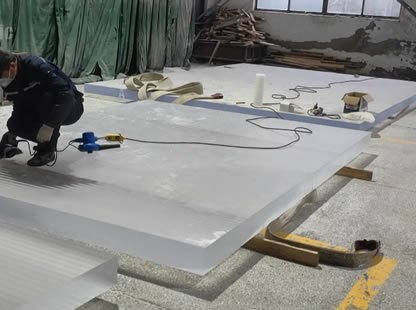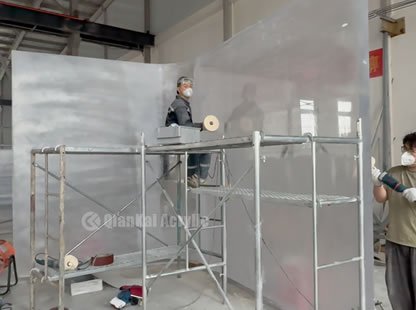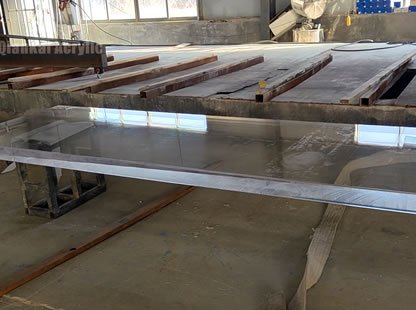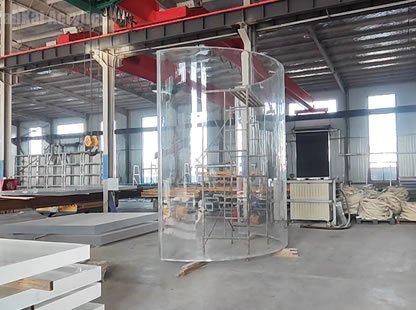
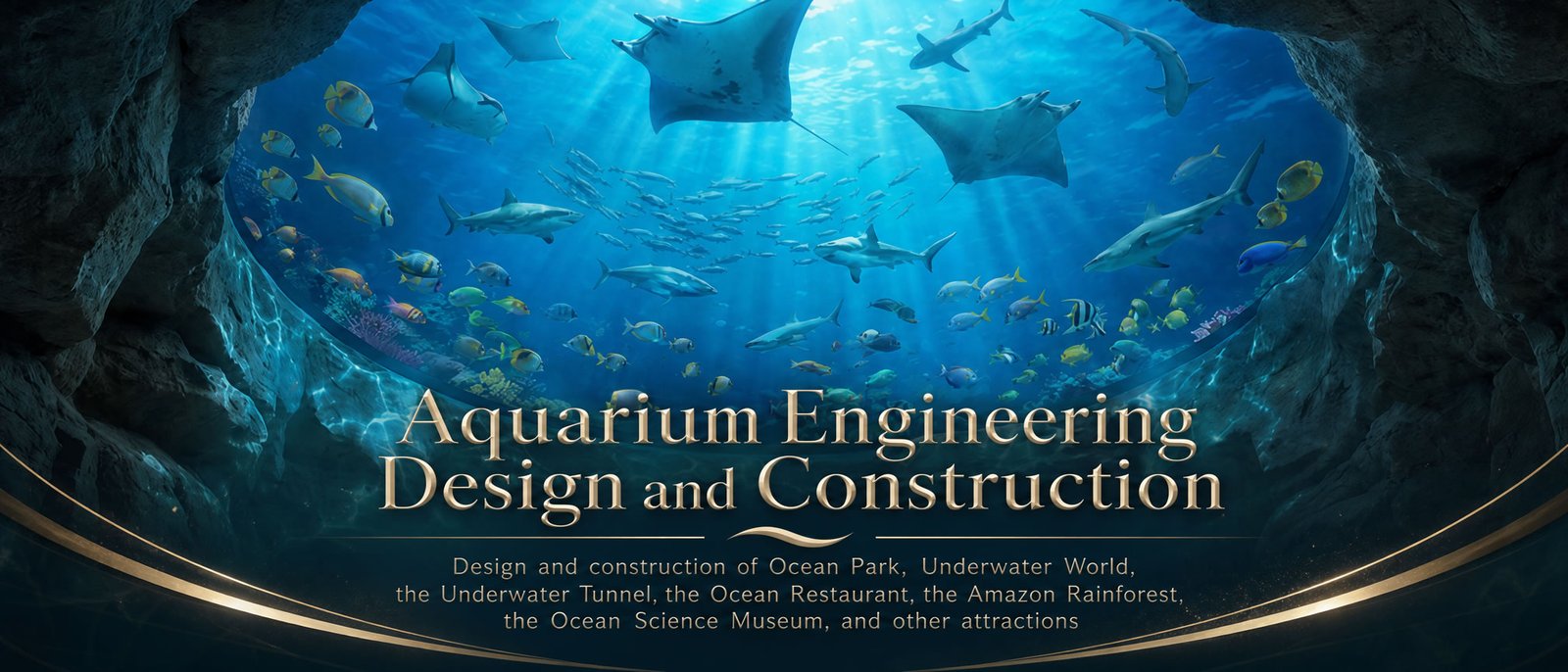


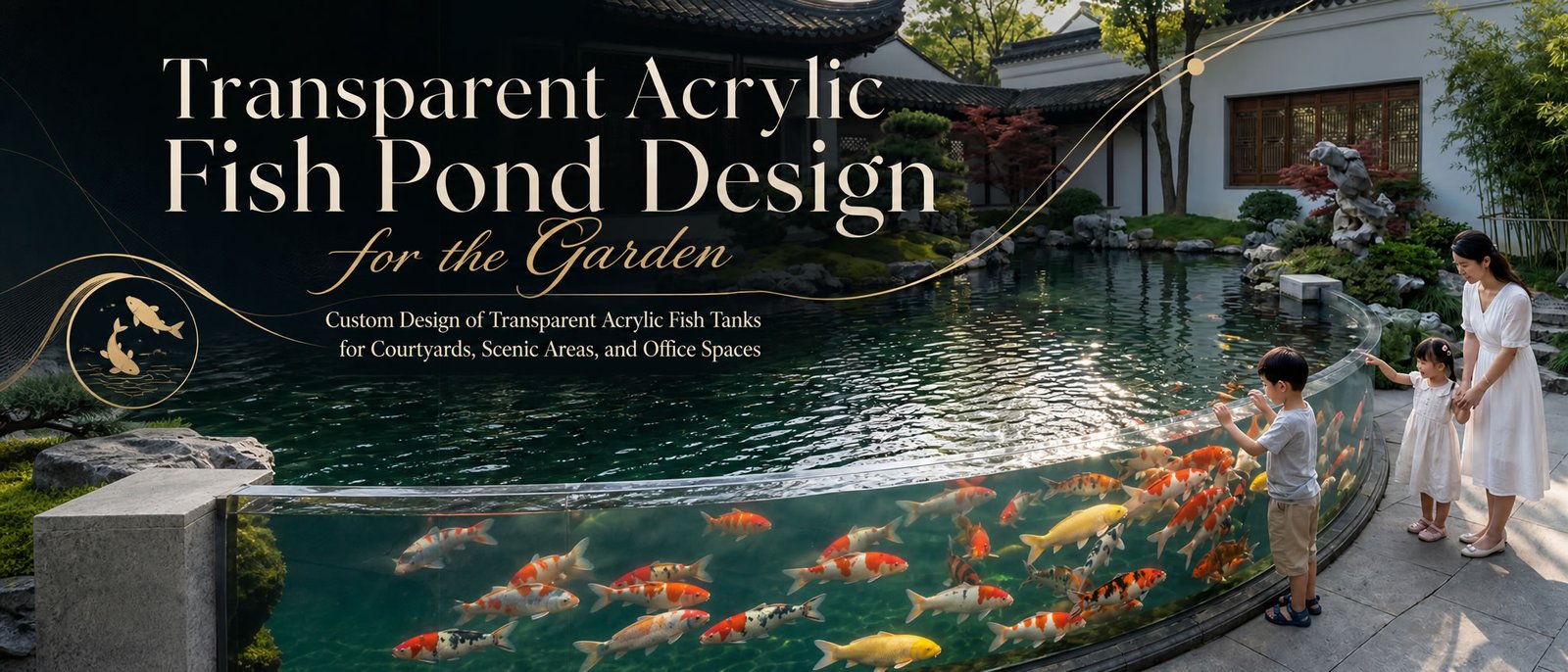
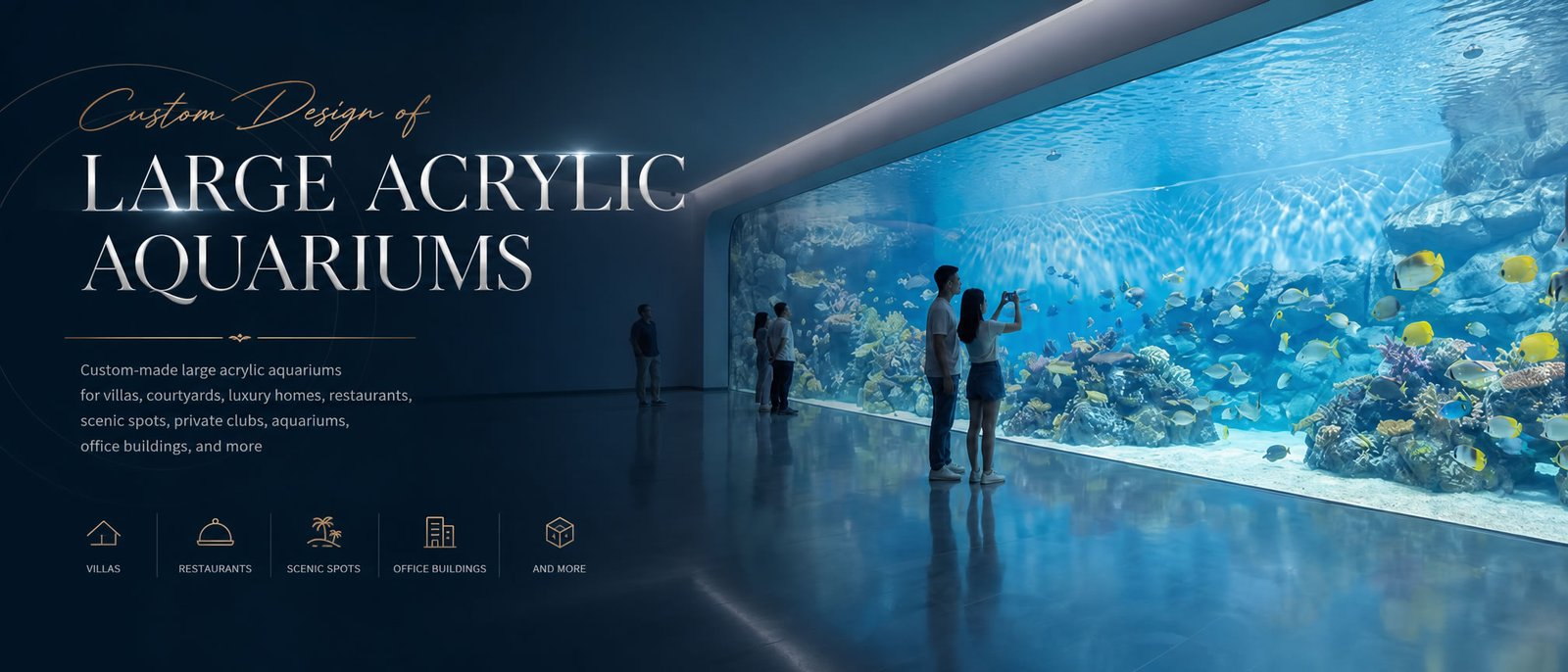
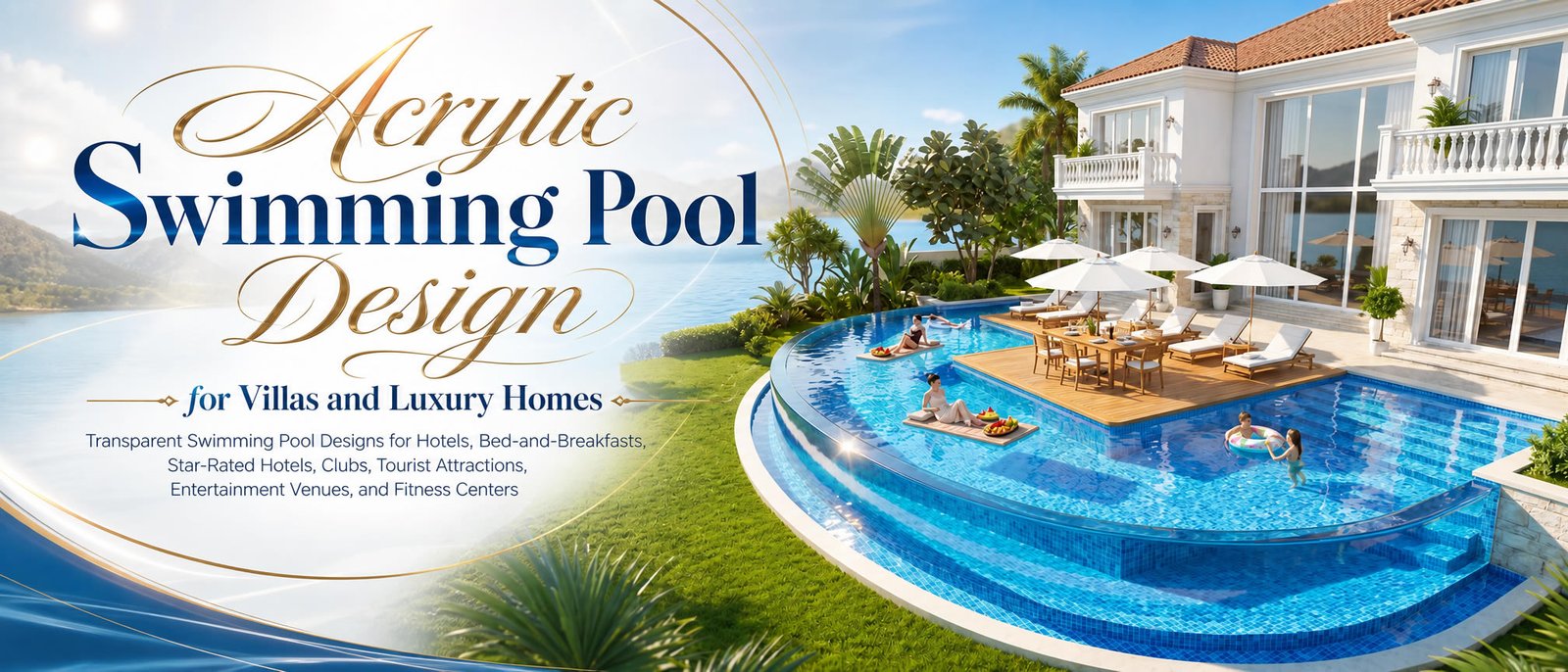
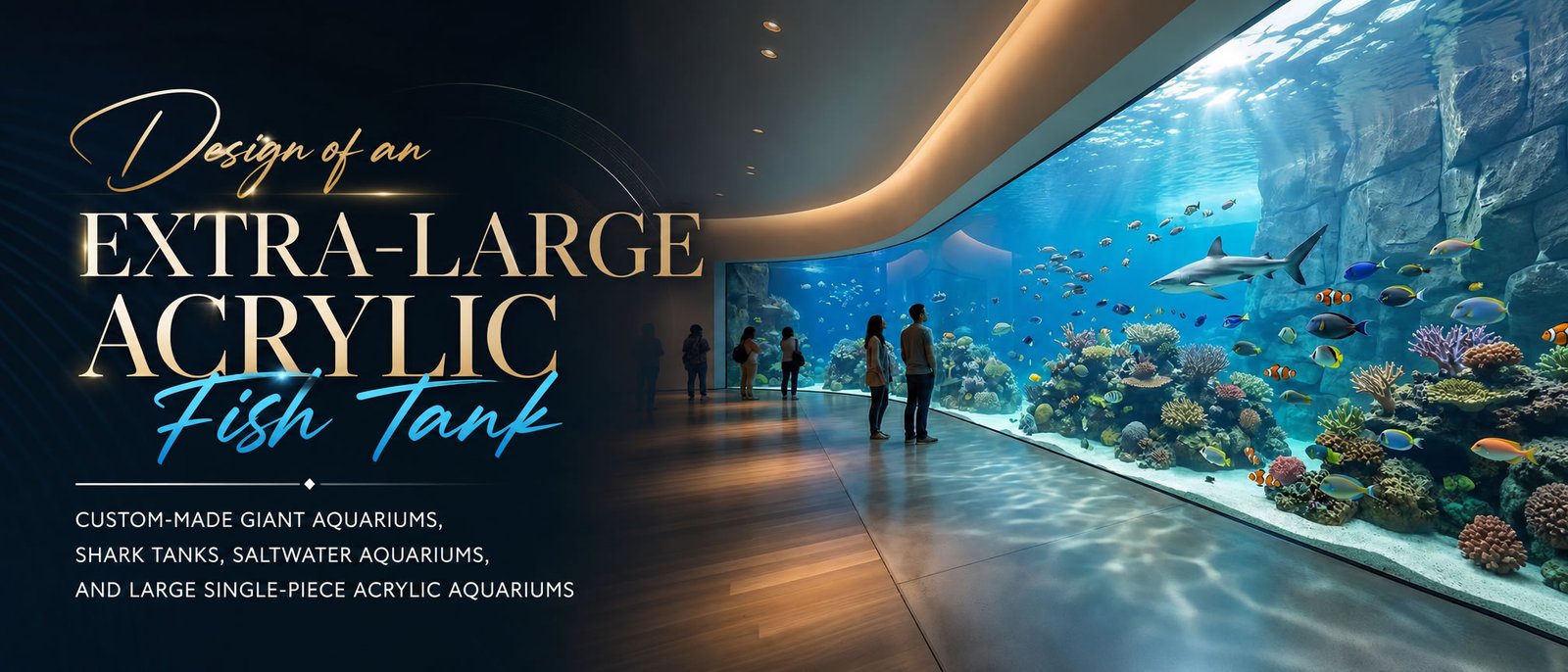
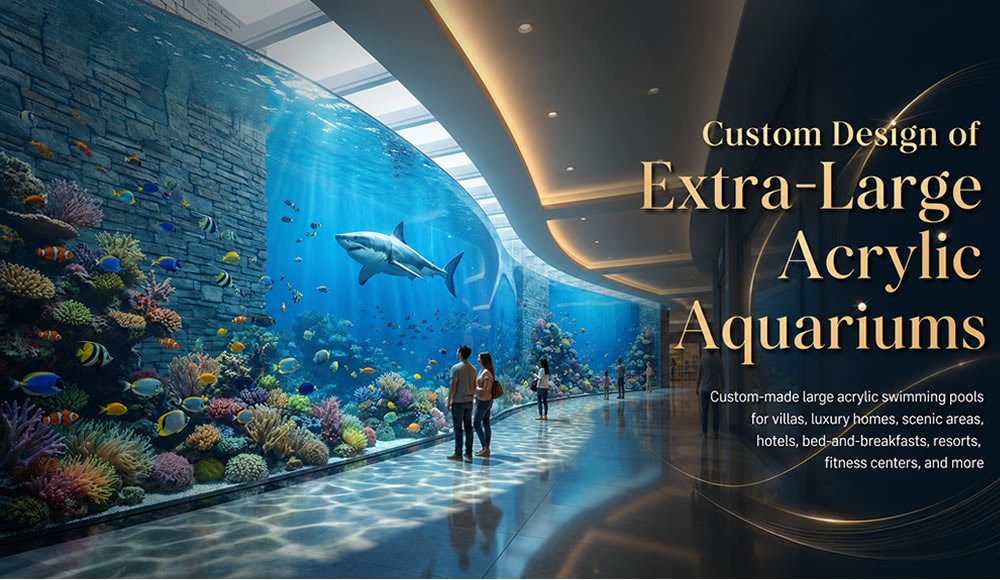
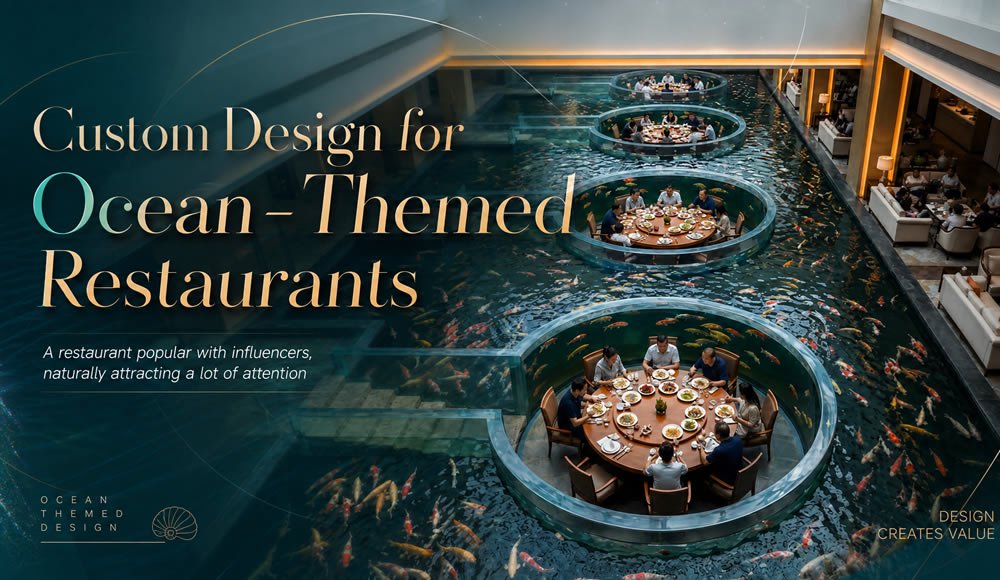

Choosing 120-millimeter-thick acrylic sheets to custom-build an aquarium is by no means simply a matter of “using sturdy materials”; rather, it is a precision engineering design based on materials science, structural mechanics, and safety. This thickness is selected to address the extreme challenges that large aquariums face in terms of safety, durability, and visual appeal.
Why is a 120-millimeter thickness necessary?
In environments with large dimensions and high water pressure, acrylic must be sufficiently thick to overcome the challenges posed by its own physical properties and ensure the long-term safety of the aquarium.
Resisting Water Pressure and Deformation: For every 1-meter increase in water depth, the water pressure at the bottom increases by nearly 10 kilopascals (kPa). At depths of several meters, the immense water pressure causes the sheet to bulge outward. A thickness of 120 millimeters provides robust structural rigidity, effectively resisting this deformation.
Resisting Long-Term “Creeper”: Unlike rigid glass, acrylic—as a polymeric material—undergoes minute, irreversible “creeper” under prolonged water pressure. If the sheet is too thin, visible “bulging” may occur after a few years, compromising both aesthetics and safety. Increasing the thickness is the most effective way to resist this long-term deformation.
Compensating for Material Properties: Acrylic’s impact resistance far exceeds that of glass, but its tensile strength (the ability to resist being pulled apart) is weaker than that of glass. The side walls of an aquarium are subjected to the immense outward tensile force exerted by the water. Therefore, the overall structural strength must be enhanced by significantly increasing the thickness.

Advantages of a 120-millimeter-Thick Acrylic Fish Tank
Unbreakable Safety: Acrylic’s impact resistance is more than 10 times that of ordinary glass and even 16 times that of tempered glass. Even when subjected to massive external impacts, it is unlikely to shatter; even if damaged, it will only develop blunt-edged cracks, rather than the deadly sharp shards typical of glass.
Ultimate Visual Experience: High-quality acrylic has a light transmittance of 92%–93%, far exceeding that of ordinary glass (82%–85%). The 120-millimeter thickness ensures structural strength while still providing a crystal-clear viewing experience with virtually no visual distortion.
Lightweight Structural Advantages: Acrylic has approximately half the density of glass, meaning that for an aquarium of the same volume, acrylic is about 50% lighter than glass. This significantly reduces the load on floor slabs and makes transportation and installation relatively easier.
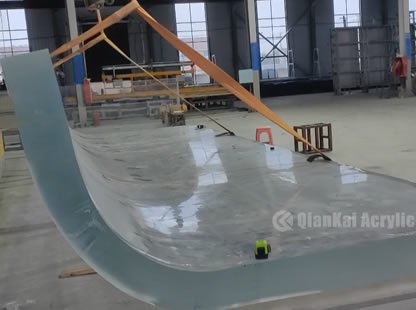
Unparalleled Design Freedom: Acrylic can be thermoformed, making it easy to create curved, cylindrical, or even complex, irregular shapes. The 120-millimeter-thick sheets offer greater structural stability and a higher yield rate when crafting large, intricate designs.
Timeless Durability: High-quality acrylic offers excellent weather resistance and a service life of over 15 years. Minor surface scratches can be restored through professional polishing, keeping the aquarium looking as good as new for years to come.

When is a 120-millimeter thickness required?
Water depth exceeds 1.5 meters: Water depth is the primary factor determining panel thickness. For aquariums with a water depth exceeding 1.5 meters, the required thickness is typically 50–80 millimeters or more. As the water depth continues to increase, a thickness of 120 millimeters becomes necessary.
Extremely long aquariums: The longer the aquarium, the greater the surface area of the side walls subjected to stress, and the higher the risk of bending. A 7-meter-long, 1.5-meter-high aquarium requires panels 50–80 mm thick; for even larger projects, 120 mm is a common choice.
Complex Tank Shapes: For non-standard structures such as arched, cylindrical, or S-shaped designs, thick panels provide better structural stability and superior forming results.
Commercial or Public Displays: Venues such as aquariums, hotel lobbies, and high-end shopping malls have extremely high requirements for safety and visual impact. A thickness of 120 millimeters provides the highest level of safety assurance and the best display effect.
Special display requirements: Some displays require aquariums to support extremely high total weights. For example, there was once an aquarium in Shanghai made from 120-millimeter-thick acrylic sheets used to display a car; the tank itself weighed 9 metric tons, held over 40 metric tons of water, and had a total weight exceeding 60 metric tons. Only this thickness could handle such a load.

Why Not Use Glass?
Since glass is harder, why isn’t it chosen for large aquariums? The main reasons lie in safety concerns and manufacturing limitations.
Safety Is the Fundamental Red Line: Glass’s “brittleness” is its fatal weakness. Under immense water pressure, even the slightest flaw or accidental impact can cause the glass to shatter instantly, with catastrophic consequences. Acrylic, on the other hand, does not shatter even if damaged, making the difference in safety worlds apart.
Manufacturing faces physical limitations: Producing defect-free glass panels of extreme thickness and size is technically extremely difficult and prohibitively expensive. Even if produced, their weight would be staggering, posing a massive challenge to building structures and installation.










 Optimized by Seraphinite Accelerator